
Why Visit?
Tokyo has countless neighbourhoods, but few feel quite as theatrical as Kabukicho.
The district is often described as a place that never sleeps, and the reputation is easy to understand. Restaurants and bars stay open late, entertainment venues fill the streets and huge illuminated signs turn ordinary buildings into part of the spectacle.
For visitors, however, the attraction is as much about walking through the neighbourhood as choosing somewhere to spend the evening. The further you wander from Shinjuku Station, the more the scenery changes, from bright commercial streets to narrow lanes packed with small bars and restaurants.
It is Tokyo at its most energetic, theatrical and unpredictable.
From Post-War Reconstruction to Entertainment Capital
Kabukicho’s story begins in the aftermath of the Second World War.
The district was established in 1948 as part of Tokyo’s reconstruction efforts. Plans originally included attracting a kabuki theatre to the area, which inspired the name Kabukicho, meaning roughly “Kabuki Town”. Although the theatre plan never came to fruition, the name remained and entertainment businesses soon began moving into the neighbourhood.
Theatres, cinemas, restaurants and bars followed, gradually transforming Kabukicho into one of Japan’s most famous entertainment districts.
What began as a post-war redevelopment project eventually became one of the defining nightlife areas of modern Tokyo.
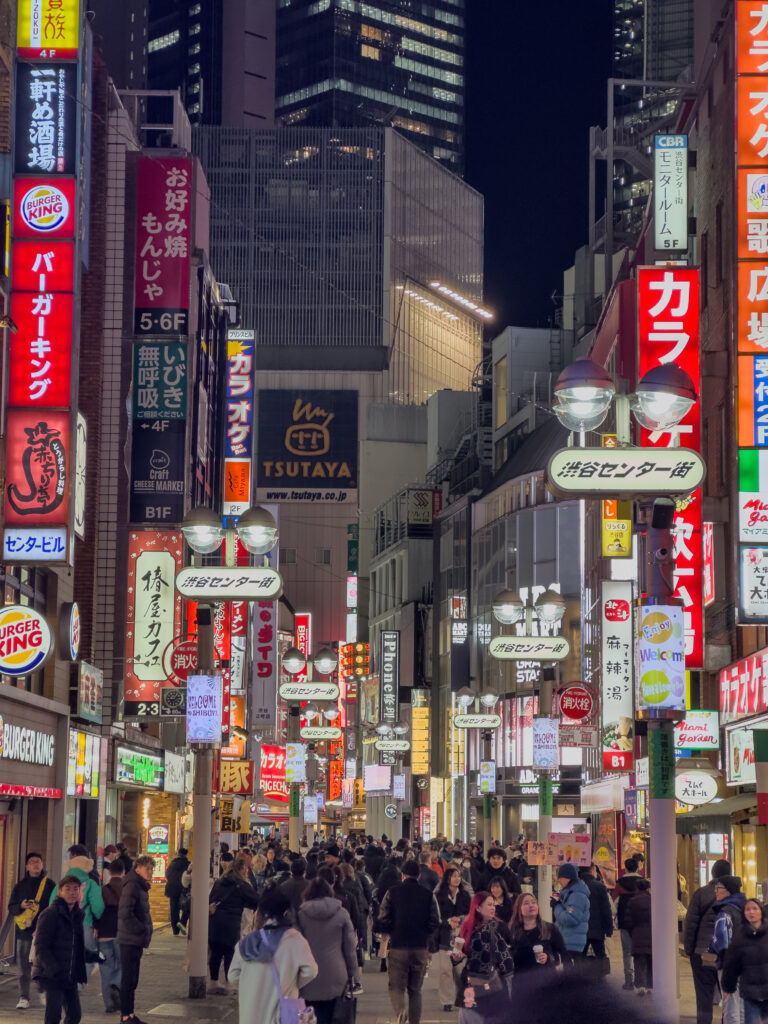
Neon After Dark
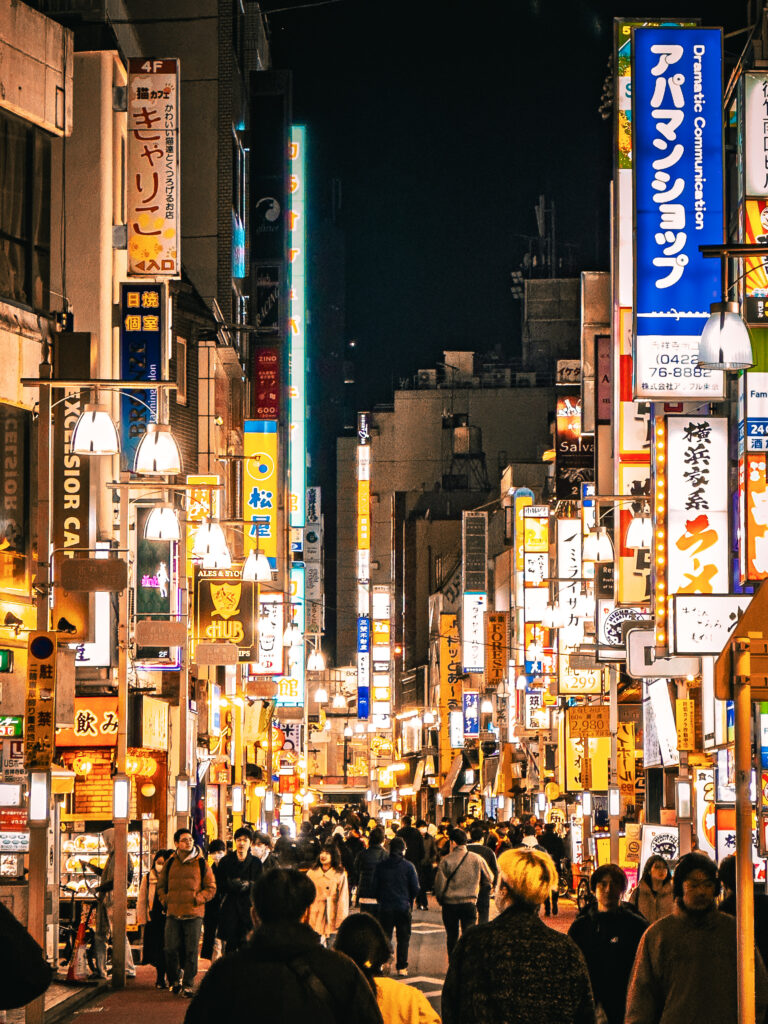
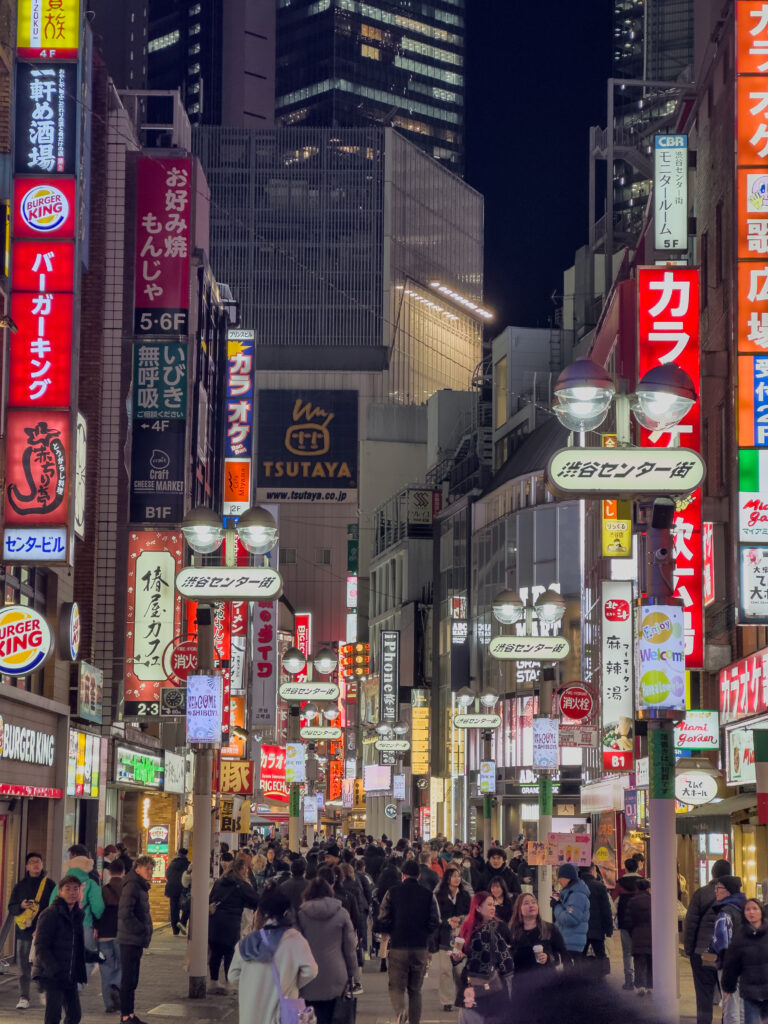
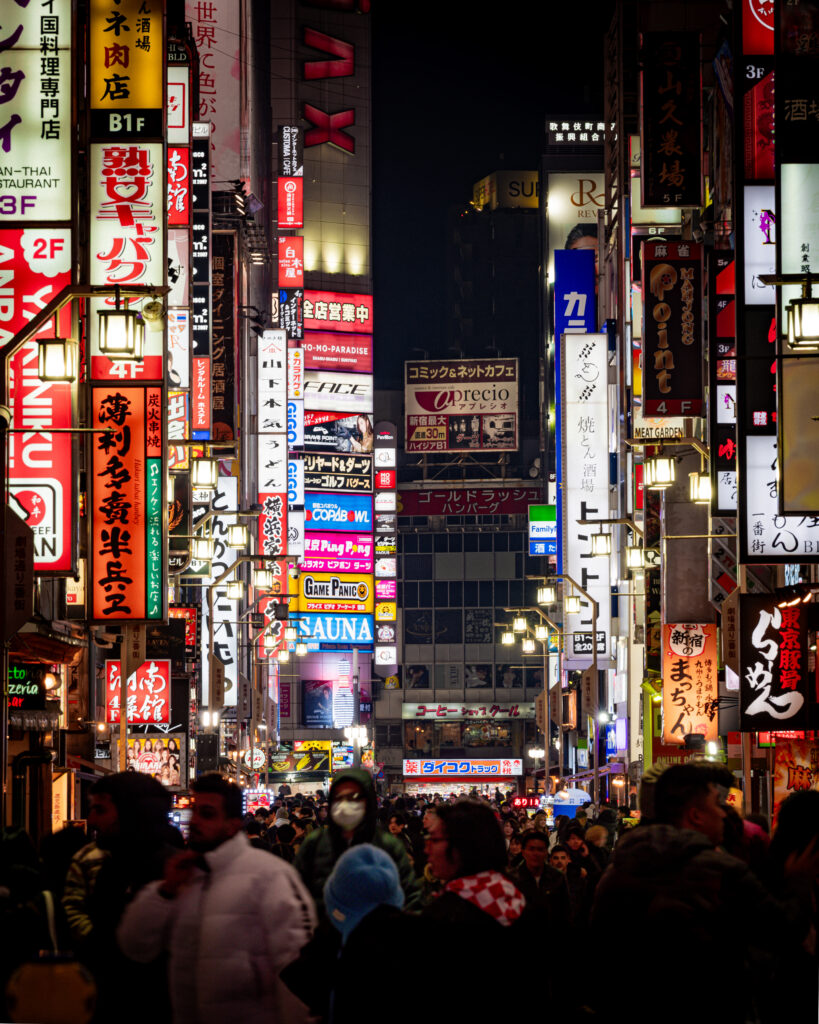
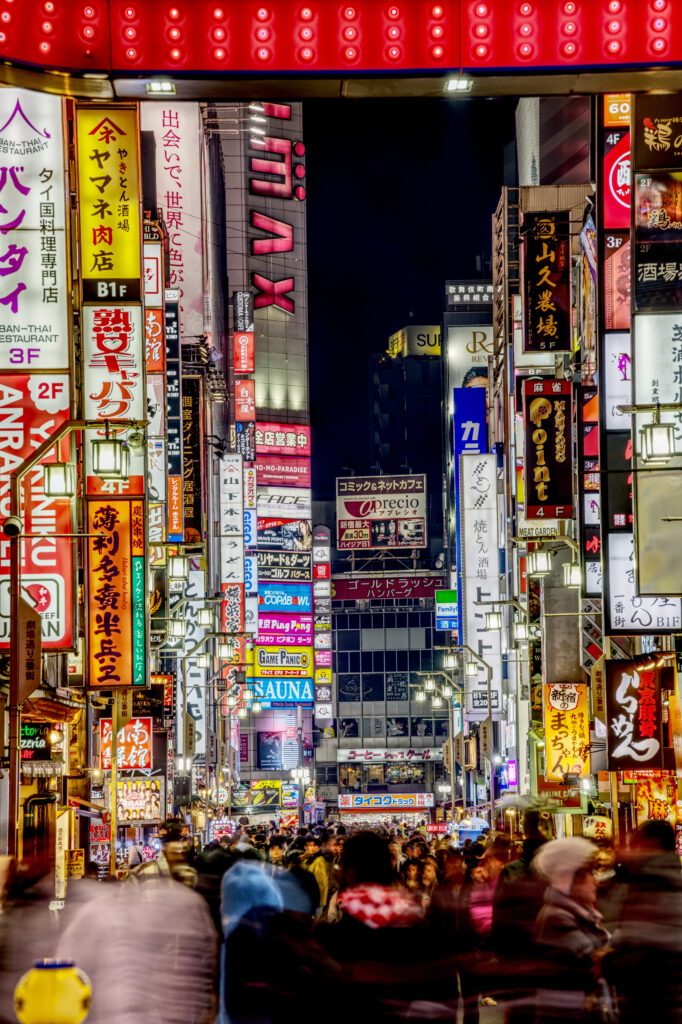
The best time to understand Kabukicho is after sunset.
As the daylight fades, the signs switch on and the streets become a constantly changing display of colour and movement. Restaurants advertise from every direction, giant digital screens compete for attention and crowds move between venues.
The official Tokyo tourism guide describes Kabukicho as a maze of hotels and nighttime entertainment, while Shinjuku’s wider east side becomes increasingly lively after dark.
There is no single landmark that defines the neighbourhood. The experience comes from the accumulation of everything around you.
One street leads to another, another sign catches your eye and suddenly an hour has passed.
The Godzilla Watching Over Kabukicho
One of Kabukicho’s most recognisable landmarks is impossible to miss.
A life-size Godzilla head sits on the terrace of the Shinjuku Toho Building, overlooking the streets from the eighth floor. The building opened in 2015 on the former site of the Shinjuku Koma Theater and Shinjuku Toho Hall.
The head is roughly 50 metres above ground, corresponding to the height of Godzilla in the original 1954 film. It has become a symbol of the revitalised neighbourhood and one of the easiest landmarks to use when exploring Kabukicho.
Look closely around the building and you will even find Godzilla-themed manhole covers, created as part of Shinjuku’s celebration of the character’s connection with the area.
A New Generation of Entertainment
Kabukicho has continued to evolve.
In 2023, Tokyu Kabukicho Tower opened as one of Japan’s largest entertainment complexes of its kind. The 48-storey building includes hotels, a cinema, theatre, restaurants, a live music venue and a nightclub.
Inside, Kabuki Hall recreates the atmosphere of a traditional yokocho, with ten food outlets representing different regions of Japan. Below ground, Zepp Shinjuku hosts live performances, while the Zero Tokyo club adds another layer to the district’s nightlife.
The tower is a good example of how Kabukicho continues to reinvent itself. Its historic identity remains visible on the streets, while new entertainment spaces continue to change the skyline.
Beyond the Neon
Kabukicho is famous for nightlife, but there is more to discover if you slow down.
Just beyond the main entertainment streets sits Hanazono Shrine, a historic Shinto shrine considered the protector of the area. Its quieter grounds provide a striking contrast to the neon streets nearby. During November’s Tori no Ichi festival, the shrine becomes especially lively as vendors sell elaborately decorated rakes believed to bring good fortune.
This contrast is one of the things that makes Shinjuku so interesting. A few minutes can take you from giant digital screens and crowded entertainment streets to a traditional shrine surrounded by trees.
A Neighbourhood That Never Really Stops
Kabukicho’s energy extends well beyond dinner time.
Bars, restaurants, karaoke venues and other entertainment businesses operate late into the night, while Shinjuku’s enormous transport network keeps the surrounding district connected to the rest of Tokyo.
Even after the last trains begin to depart, the streets remain active.
That makes Kabukicho particularly interesting for visitors who want to experience Tokyo after dark without following a fixed itinerary. You can simply walk, look around and decide what catches your attention.
How to Experience Kabukicho
Start from the East Exit of Shinjuku Station and walk towards Kabukicho.
Begin around the main streets and take time to absorb the enormous signs and crowds before heading towards the Shinjuku Toho Building and its famous Godzilla head.
From there, wander through the surrounding entertainment streets. Stop for food, explore a few shops or simply follow whichever neon-lit street looks interesting.
If you have more time, continue towards Tokyu Kabukicho Tower or make your way towards Hanazono Shrine for a completely different atmosphere.
The area is compact enough to experience within an hour, but there is plenty to keep you occupied for an entire evening.
What Makes This Experience Special?
Kabukicho captures something essential about Tokyo: its ability to reinvent itself without losing its sense of place.
The district began as part of post-war reconstruction, grew into a major entertainment centre and continues to evolve with new restaurants, theatres, hotels and large-scale developments.
Today, the past and present exist almost side by side.
A historic shrine sits near neon-lit entertainment streets. Tiny bars compete for space beneath enormous signs. A giant Godzilla watches over the district while a 48-storey entertainment tower rises nearby.
Kabukicho is constantly changing, yet the energy remains remarkably consistent.
Practical Information
- Starting Point
Shinjuku Station’s East Exit is the easiest starting point. Kabukicho is within walking distance, with the main entertainment district beginning a few minutes from the station.
- Best Time to Visit
After sunset is when Kabukicho comes alive. Around 7:00pm onwards offers a good balance of illuminated streets, restaurants and nightlife.
- Photography
The main streets are ideal for capturing neon signs, crowds and giant digital screens. The Godzilla head provides one of the neighbourhood’s most recognisable photographs.
- Getting Around
Kabukicho is easy to explore on foot. Most of the main sights and entertainment streets are within a short walk of one another.
- Duration
Allow around one hour to experience the main streets and landmarks. An evening gives you time to explore the restaurants, entertainment venues and surrounding neighbourhoods at a slower pace.
One Hour Tourist Verdict
Kabukicho is one of those places where simply walking around becomes the experience.
Within an hour, you can move from the crowds of Shinjuku Station into streets glowing with neon, see the giant Godzilla overlooking the neighbourhood, discover restaurants and entertainment venues tucked into narrow lanes and witness how Tokyo’s nightlife continues to evolve.
Its history makes the experience even more interesting. What began as a post-war reconstruction project became one of Japan’s most famous entertainment districts, and today it continues to reinvent itself with new attractions and developments.
For OneHourTourist, Kabukicho is worth experiencing simply because it feels unmistakably Tokyo. You do not need a packed itinerary. Walk slowly, look up and let the neighbourhood reveal itself.