
Why Visit?
The River Kwai offers a very different side of Thailand.
There is the famous bridge, of course, but the experience goes beyond taking a photograph and moving on. A train journey along the remaining railway reveals the landscape that made construction so difficult, while nearby museums, cemeteries and memorial sites give context to the people who lived and died here.
For a traveller with limited time, Kanchanaburi brings several important sites together within one area.
The Bridge Over the River Kwai
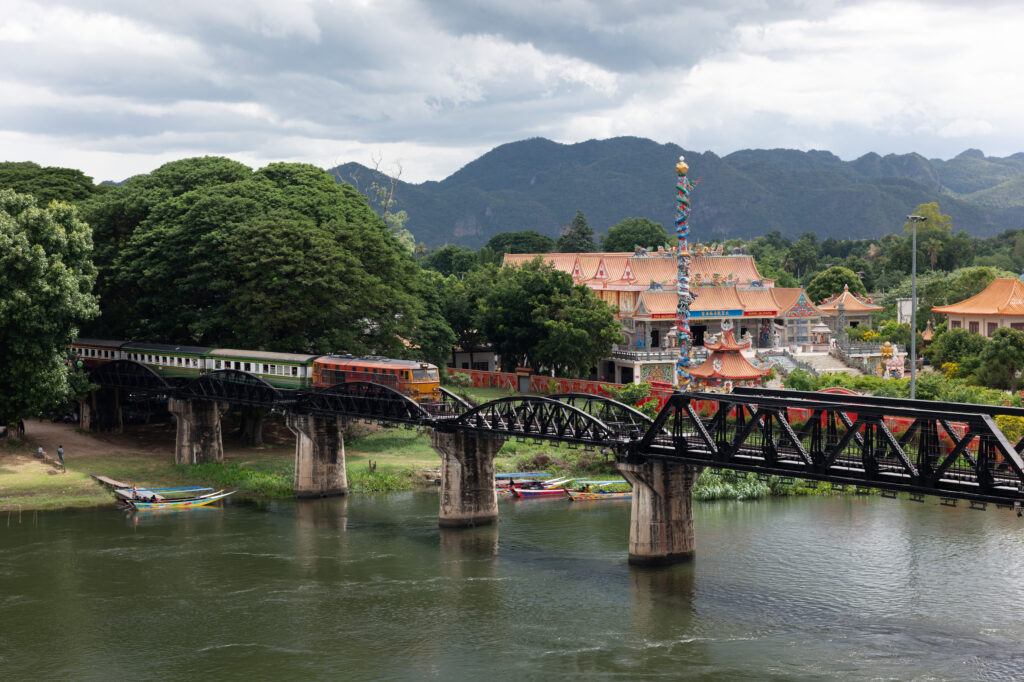
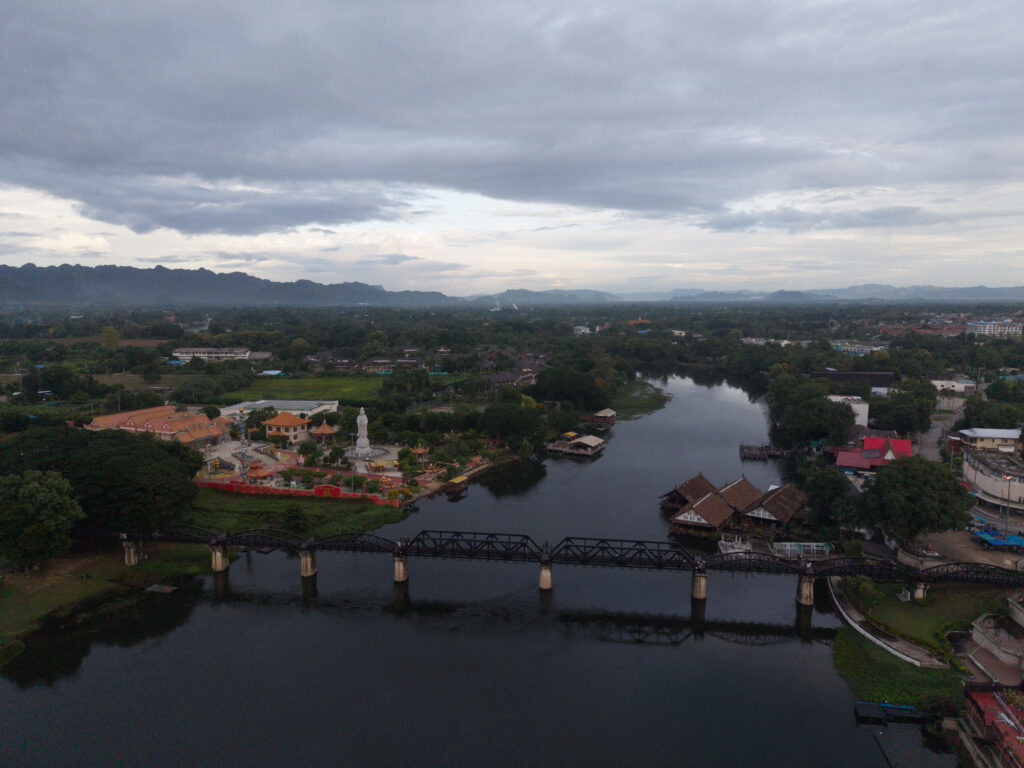
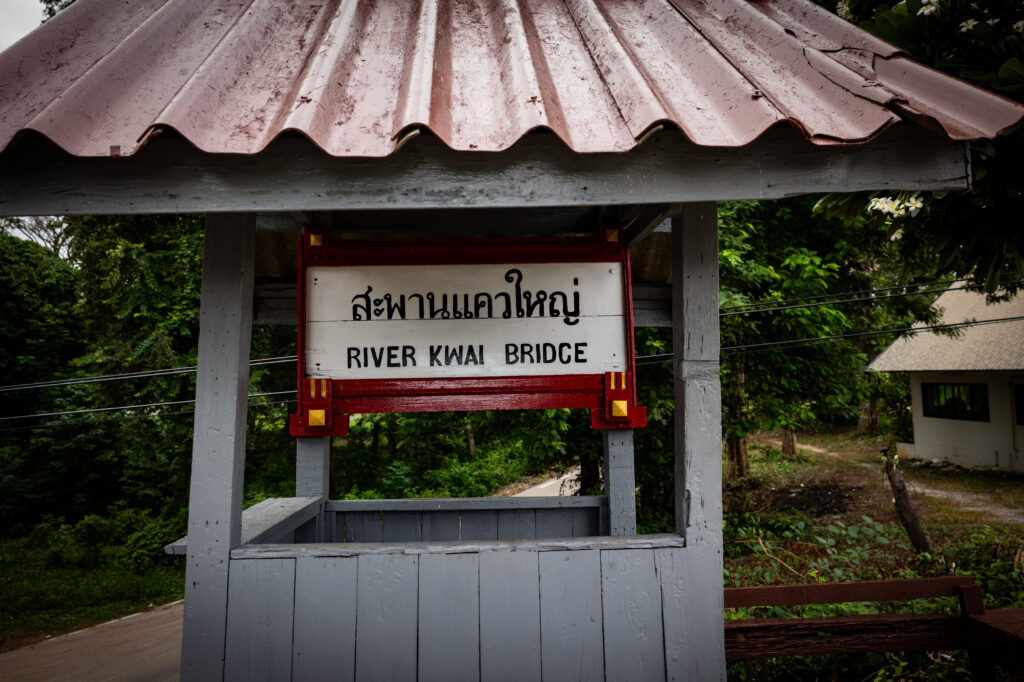
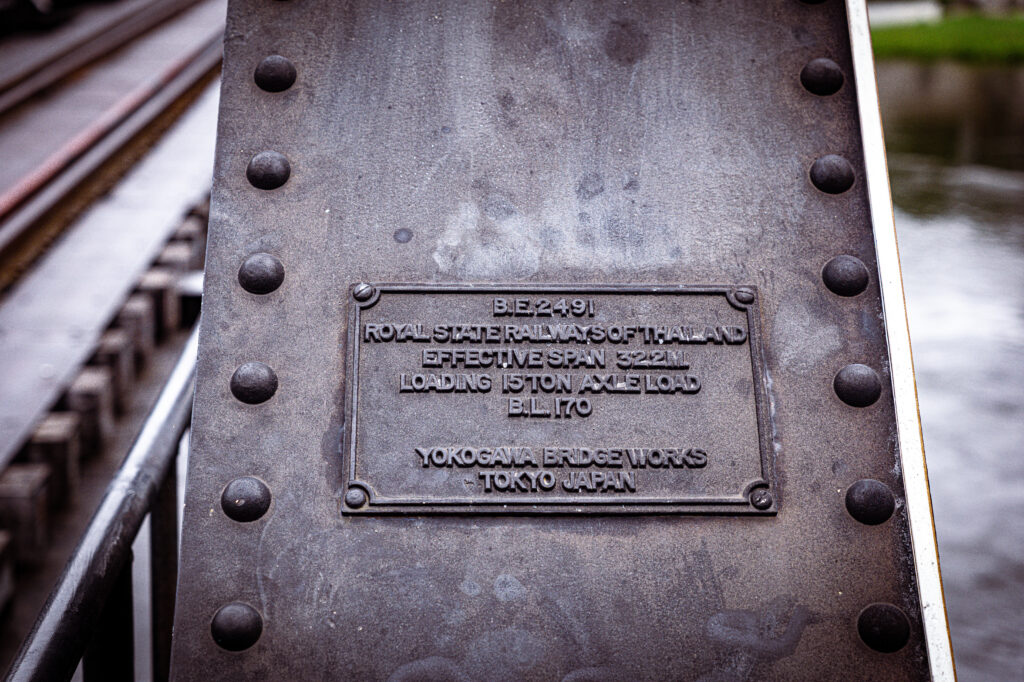
The famous bridge formed part of the Burma-Thailand Railway, which connected Thailand with Burma, now Myanmar.
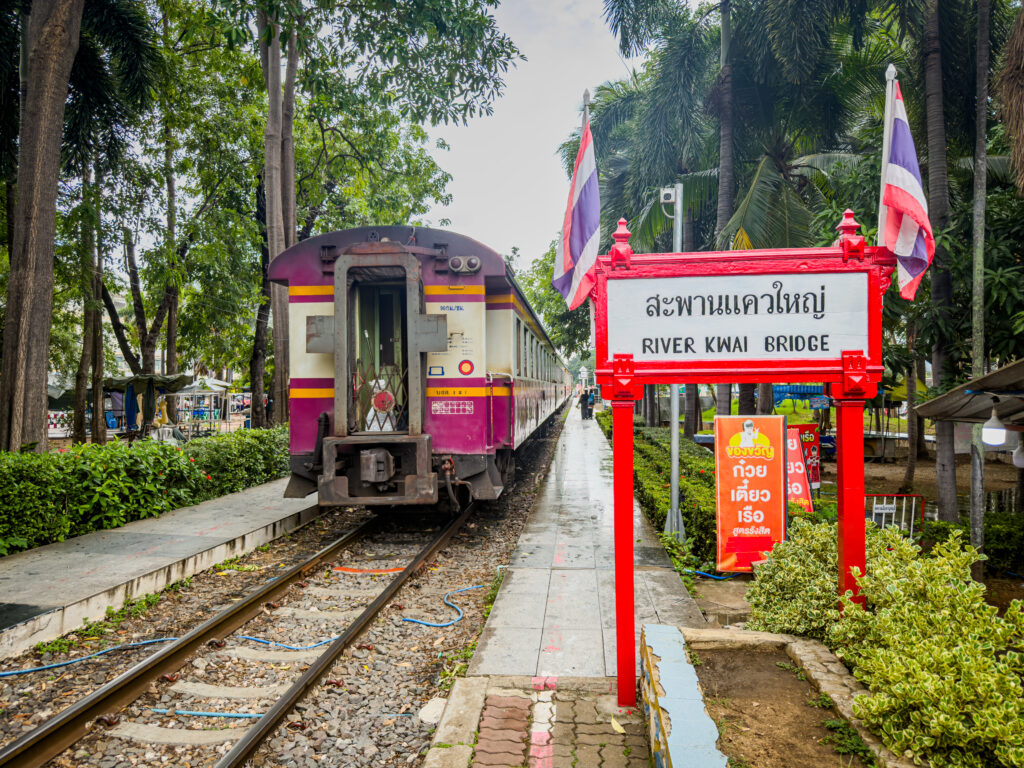
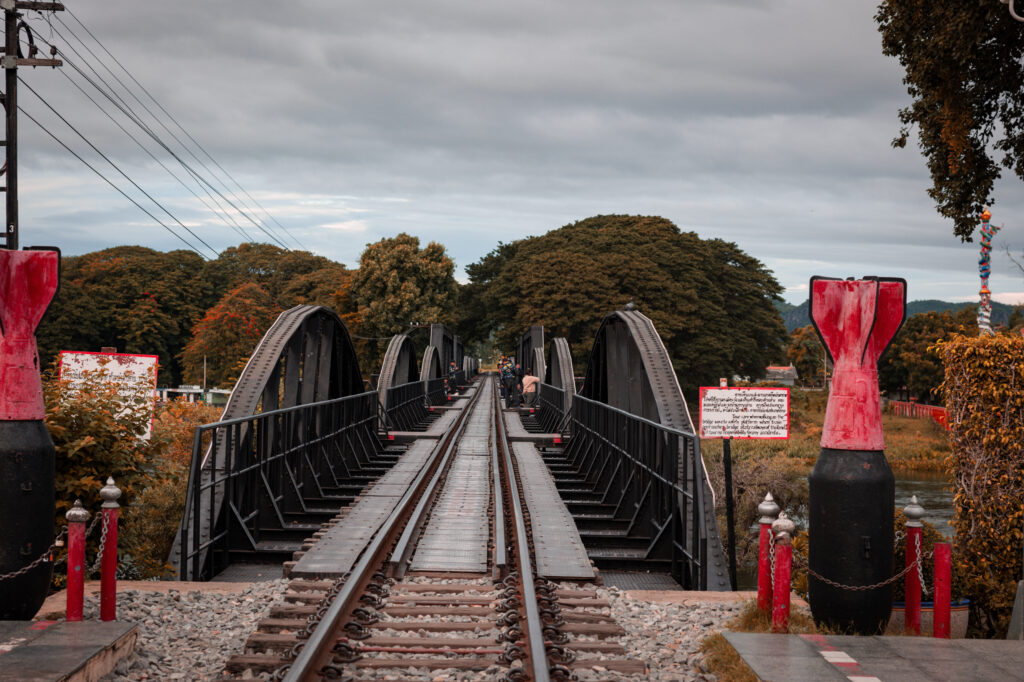
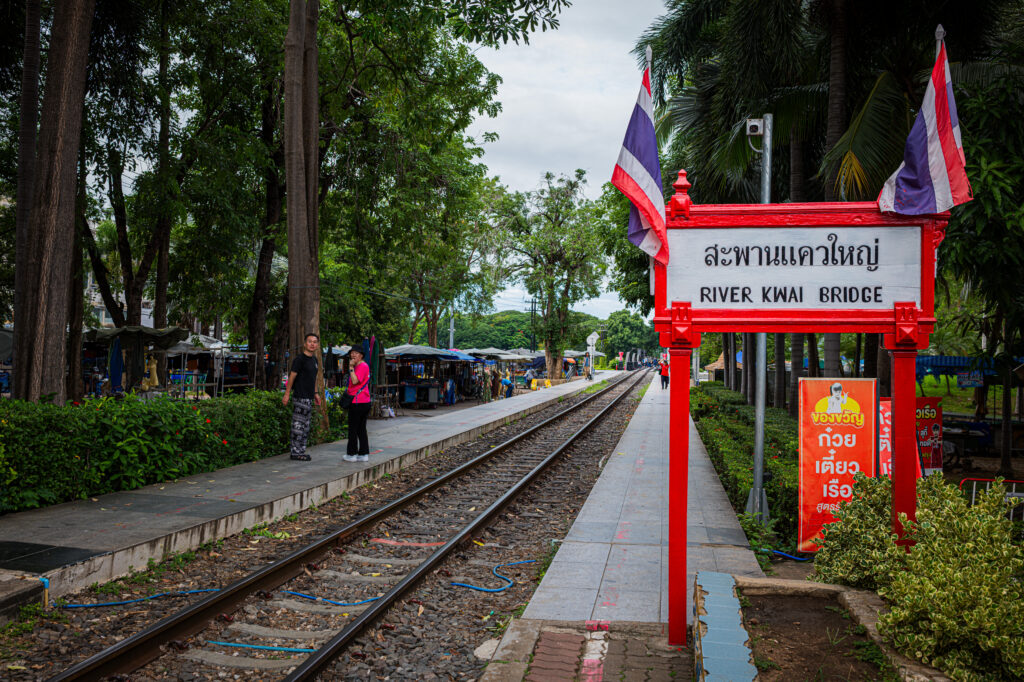
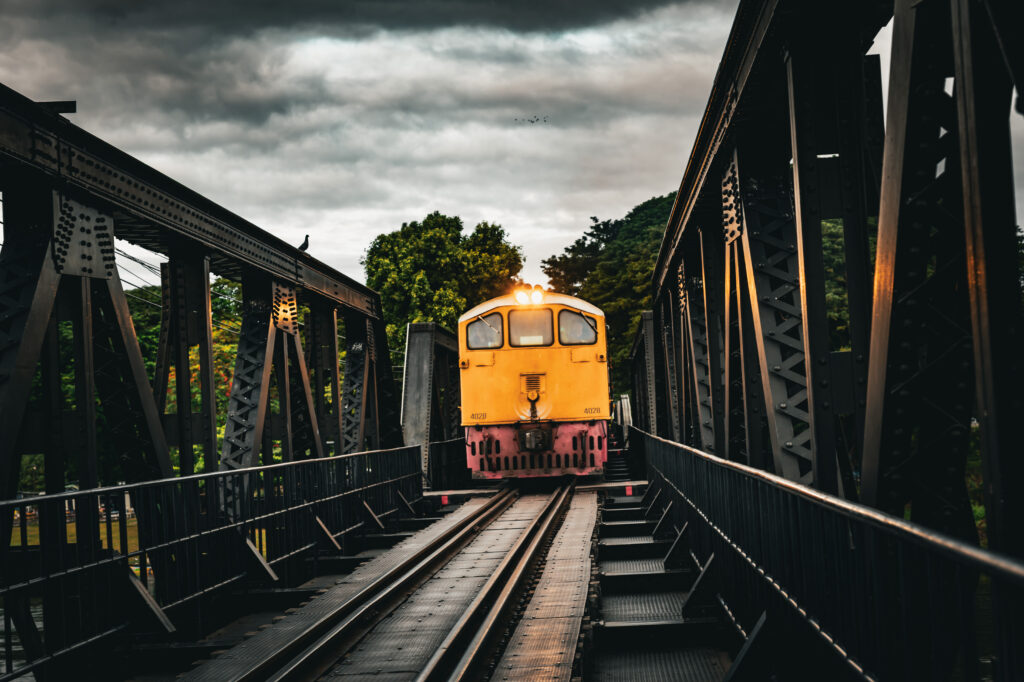
Today, trains still cross the bridge and visitors can walk along the railway tracks. The surrounding river and hills make it an atmospheric place to pause and take in the history.
The bridge also became internationally famous through the 1957 film The Bridge on the River Kwai. The film is fictional, while the railway and its history are very real.
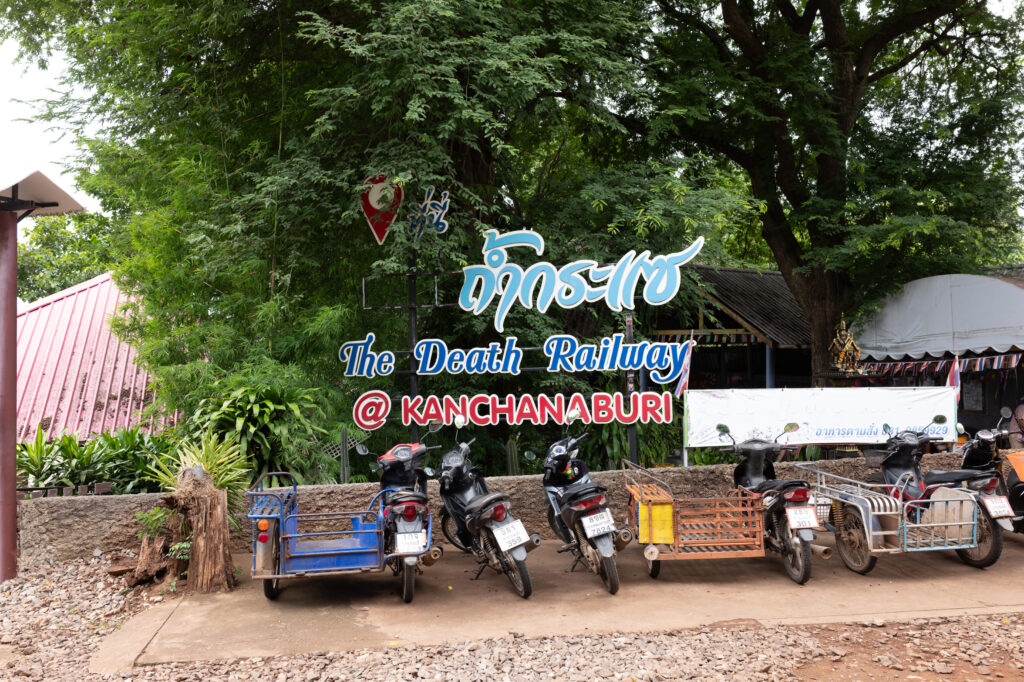
The Death Railway
The railway was built by the Japanese to transport troops and supplies to their forces in Burma.
Construction began in 1942 and the 415-kilometre line was completed in October 1943, remarkably quickly considering the difficult terrain and primitive equipment. Workers cut through rock, built bridges and laid tracks through jungle and mountainous country.
The human cost was devastating. More than 12,500 Allied POWs died, along with an estimated 75,000 Asian civilian labourers.
Riding the Railway
One of the best ways to experience the area is from the train itself.
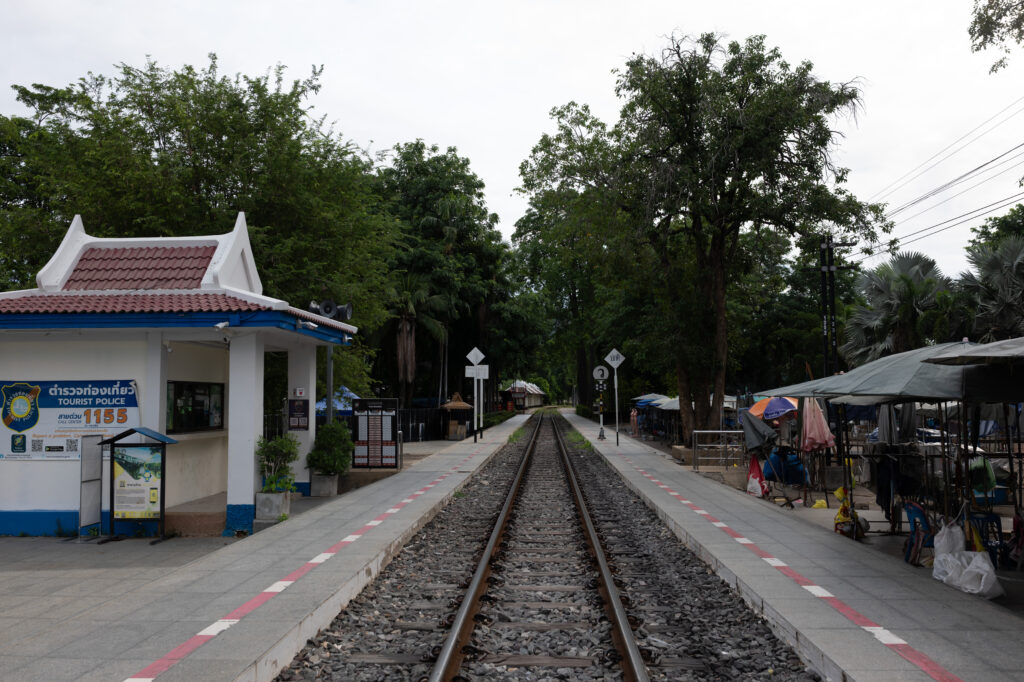
The surviving railway runs through Kanchanaburi towards Nam Tok, passing forests, hills and the River Kwai Noi. The journey is slow, giving you time to take in the landscape.
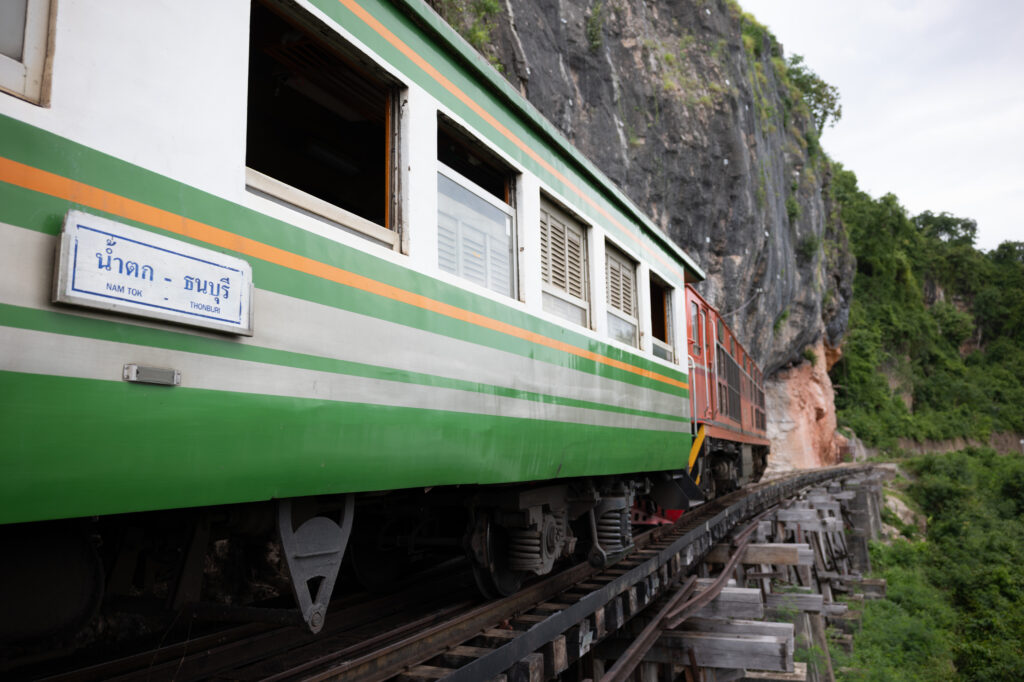
At Tham Krasae, the railway follows a wooden viaduct along the cliff above the river. It is one of the most striking sections of the journey.
The peaceful scenery creates a powerful contrast with the conditions faced by the people who built the railway.
Wang Pho Viaduct and the River Kwai Noi
One of the most memorable sections is around Tham Krasae, where the railway follows the cliff above the River Kwai Noi.
The wooden railway structure hugs the mountainside, with the river immediately below.
It is a beautiful stretch of the journey, but its appearance can also be deceptive. The railway had to cross rugged terrain, jungle and steep valleys, with workers operating under extreme conditions and very basic equipment.
Today, the train passes slowly along the viaduct, giving passengers views across the river and surrounding countryside.
This is one of those moments when the landscape tells part of the story.
Hellfire Pass
Hellfire Pass is one of the railway’s most significant surviving sites.
Workers cut a passage through solid rock by hand at Konyu Cutting. During the brutal “Speedo” period in 1943, they were pushed to work for extremely long hours to meet the Japanese construction deadline.
Today, the Hellfire Pass Interpretive Centre and walking trail allow visitors to follow part of the original route.
It is a quieter experience than the bridge and gives a much stronger sense of the physical landscape.
Remembering the People
The story of the Death Railway extends far beyond Allied prisoners.
Around 200,000 Asian labourers, known as rōmusha, were recruited or coerced into the project. They came from places including Burma, Java, Malaya and elsewhere in Southeast Asia. Their experiences and deaths are an important part of the railway’s history.
Kanchanaburi’s war cemeteries and museums help preserve these stories.
A Peaceful River with a Difficult Past
Today, the River Kwai feels remarkably calm.
Boats move along the water, trains pass through the countryside and visitors sit beside the river. Yet almost every part of the railway journey connects back to a period of immense suffering.
That contrast is what makes Kanchanaburi so memorable.
Practical Information
Location: Kanchanaburi, western Thailand
From Bangkok: Around two hours by road, depending on traffic.
Start with: The Bridge Over the River Kwai.
For the railway: Check the current State Railway of Thailand timetable before travelling.
Allow: At least half a day for the bridge and railway. A full day gives you time to add Hellfire Pass and the war cemeteries.
One Hour Tourist Verdict
The River Kwai works well as a short historical stop, but the railway adds much more depth than the bridge alone.
Walk across the bridge, ride part of the surviving railway and, if time allows, visit Hellfire Pass.
The scenery is beautiful. The history gives it meaning.