
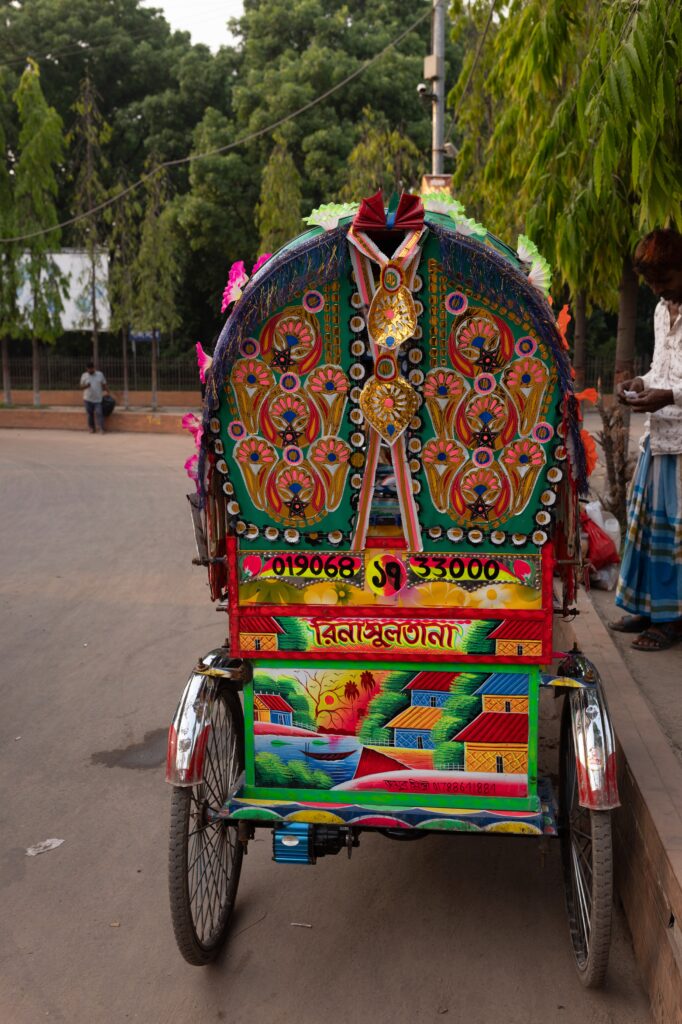
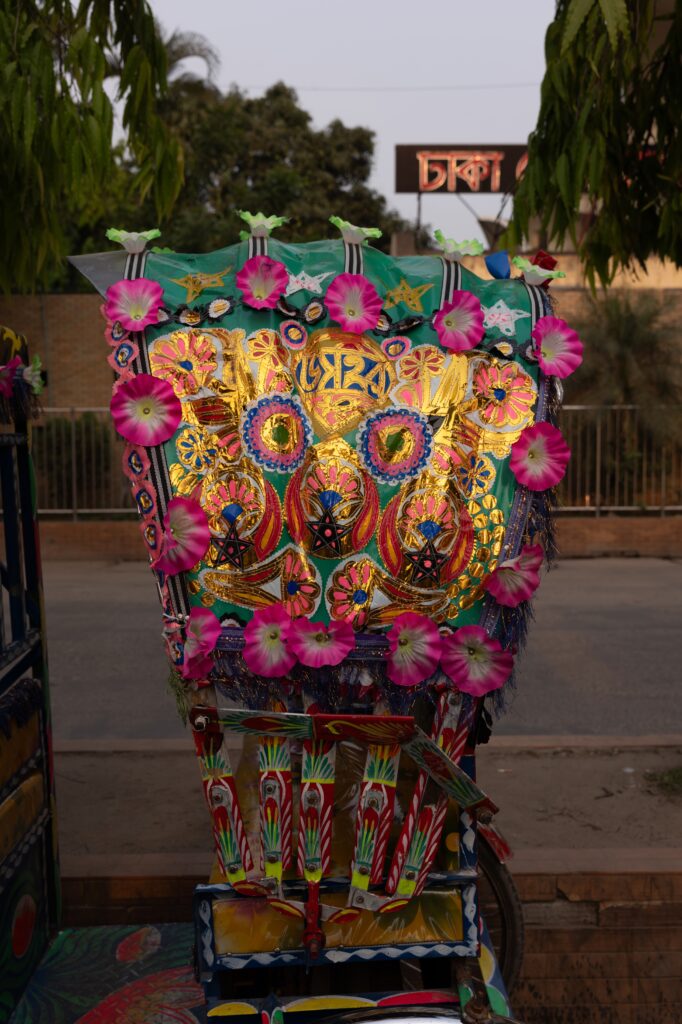
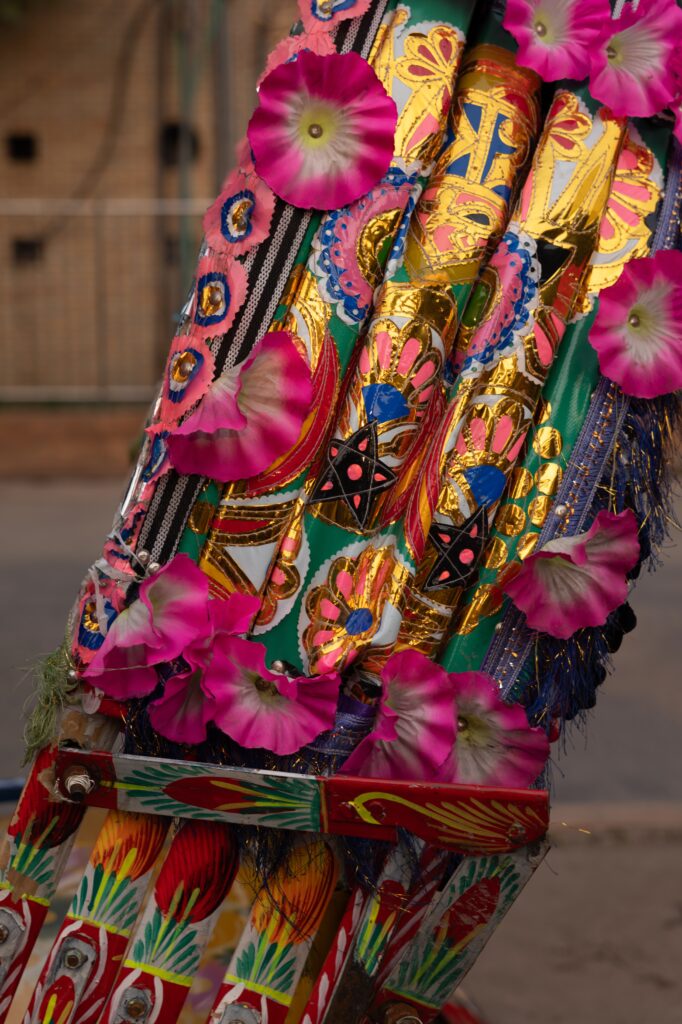
The History of Dhaka’s Rickshaws
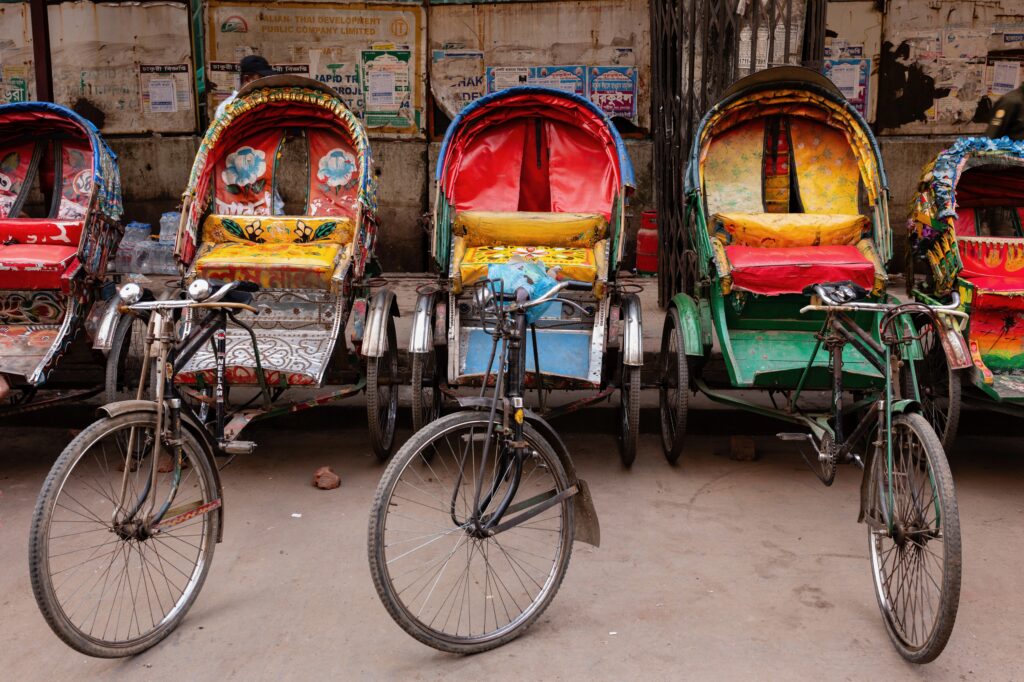
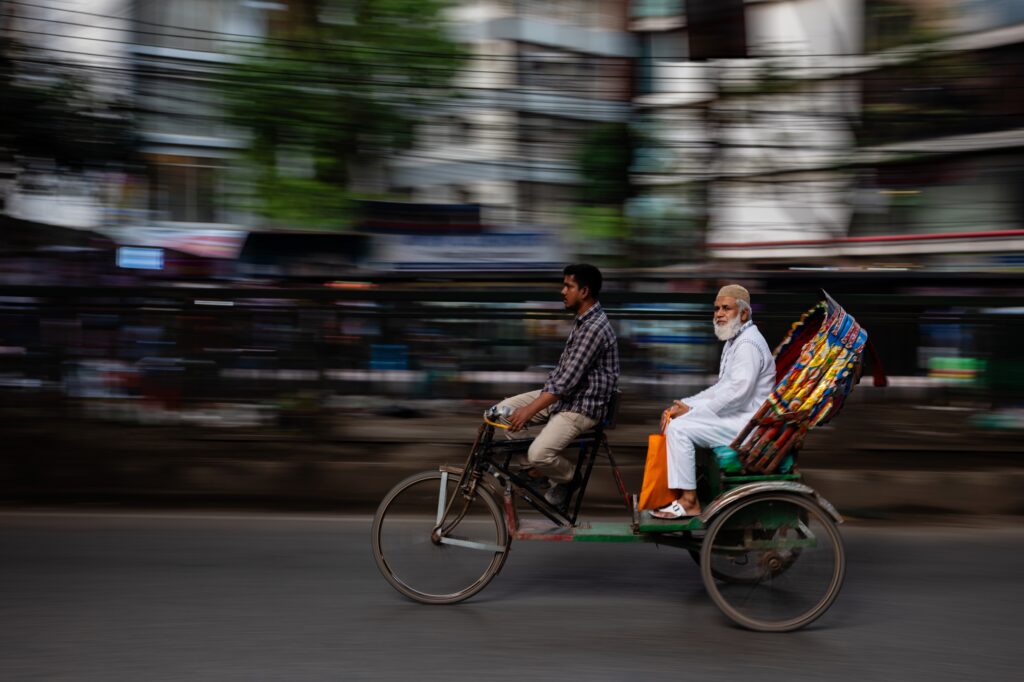
The rickshaw first arrived in what is now Bangladesh during the late 1930s. Historical accounts suggest that early examples were imported from Kolkata and initially used privately by European businessmen. Rickshaws began appearing as public transport in Dhaka around 1941 when only a few dozen operated in the city.
Over the following decades, Dhaka expanded rapidly. As the population grew, rickshaws became the ideal solution for navigating increasingly crowded streets. They were cheap to operate, required little infrastructure and could reach areas inaccessible to buses or cars.
What began as a niche form of transport evolved into one of the largest informal transport systems in the world. Today, estimates suggest there are well over a million rickshaws operating in and around Dhaka, although only a fraction are officially licensed. Millions of journeys are made by rickshaw every day.
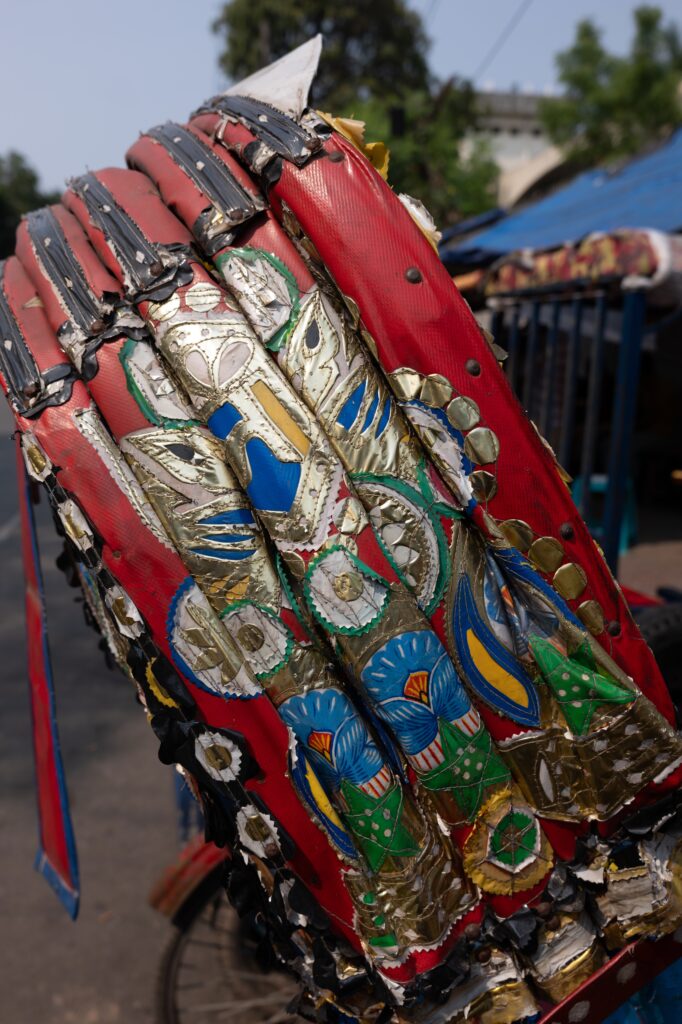
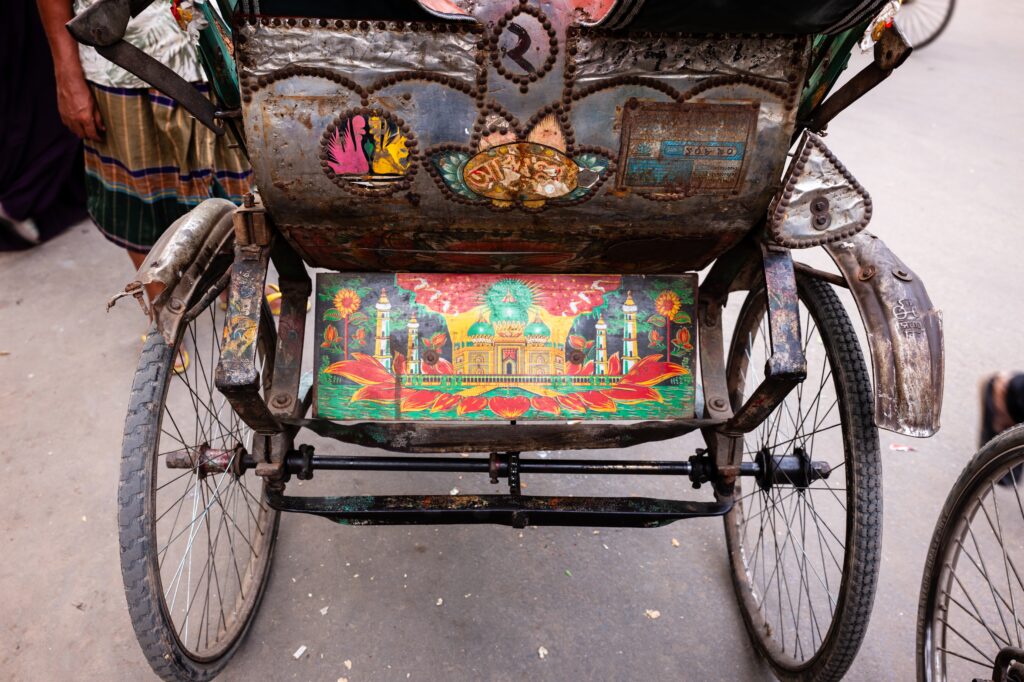
The growth of rickshaws has been so significant that they have become one of the defining visual symbols of Bangladesh itself.
Who Uses Rickshaws?
One of the fascinating aspects of Dhaka’s rickshaw culture is the diversity of its passengers.
On any given day you will see:
- Office workers commuting to work
- Students travelling between classes
- Families carrying shopping home
- Elderly residents making short local trips
- Businesspeople connecting between meetings
- Children travelling to school
- Tourists exploring neighbourhoods
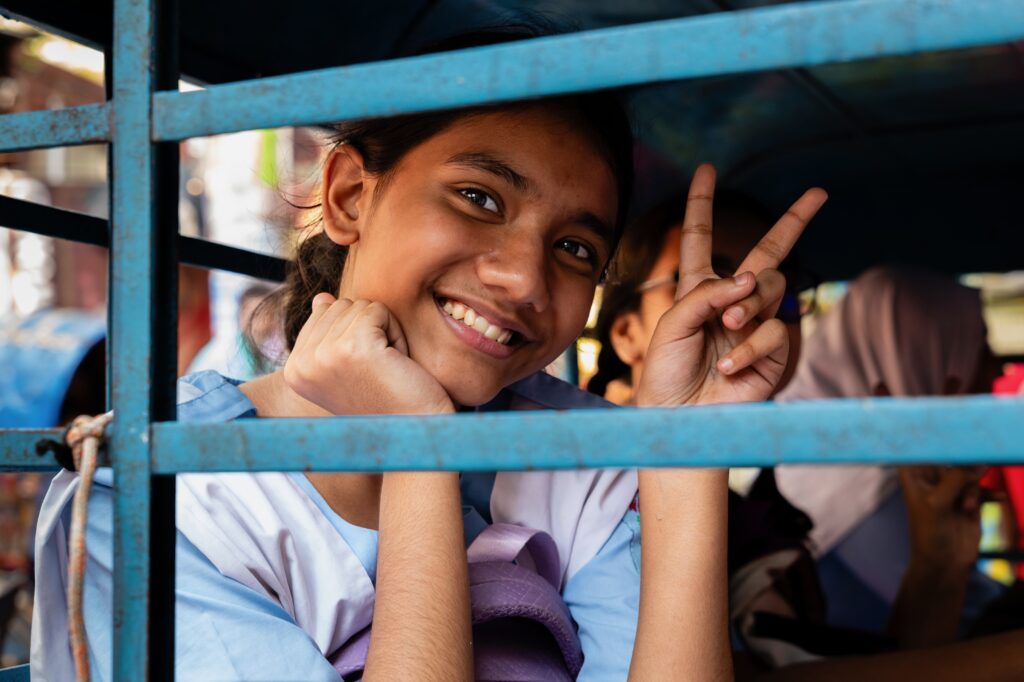
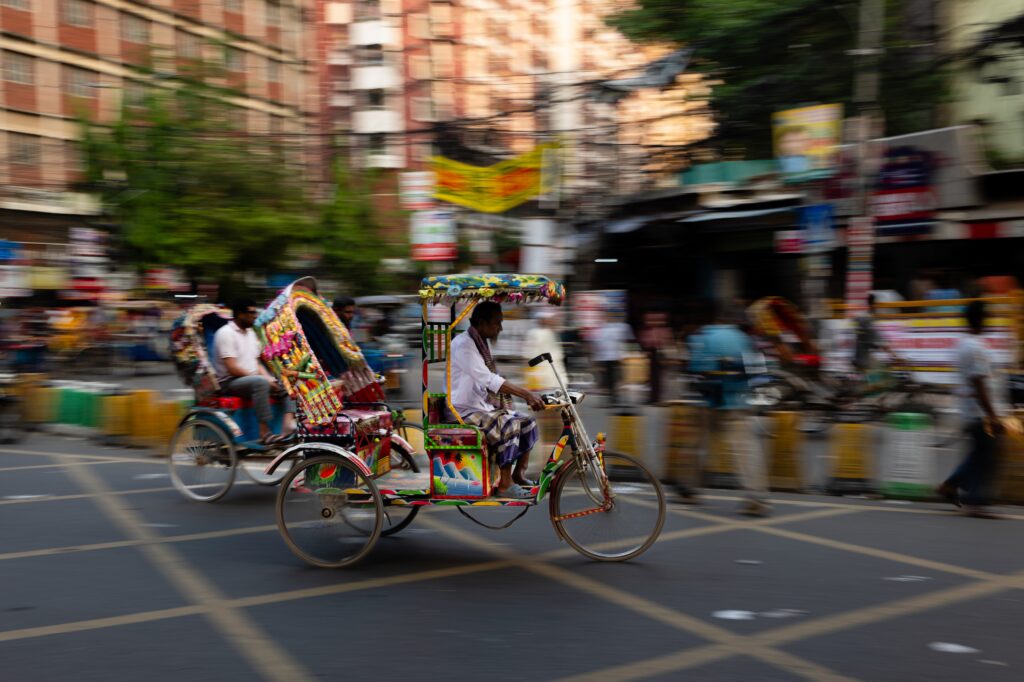
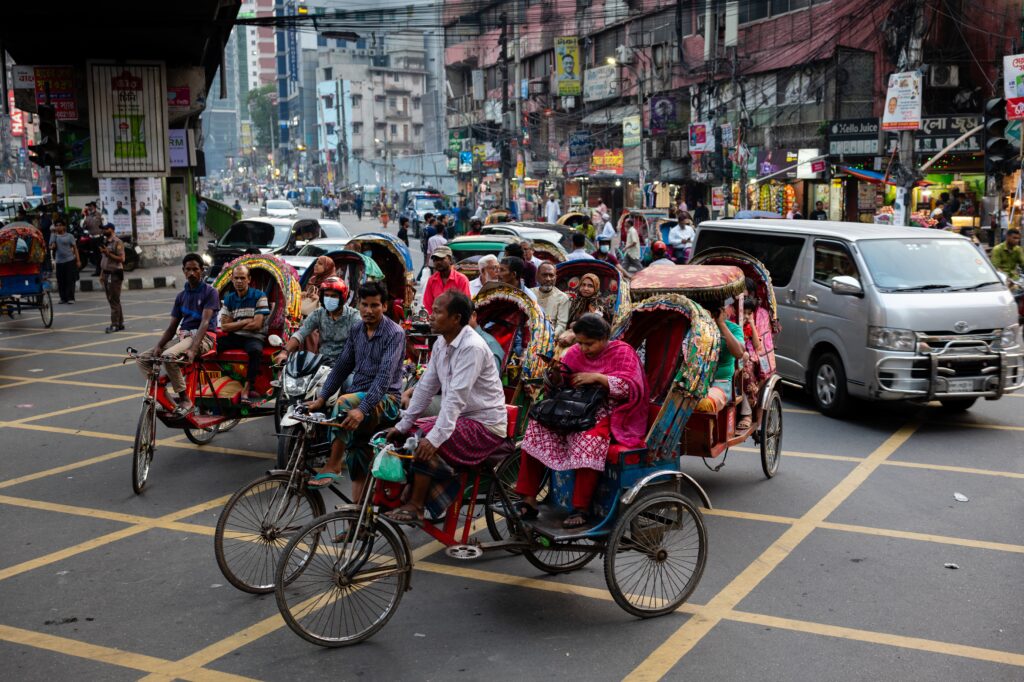
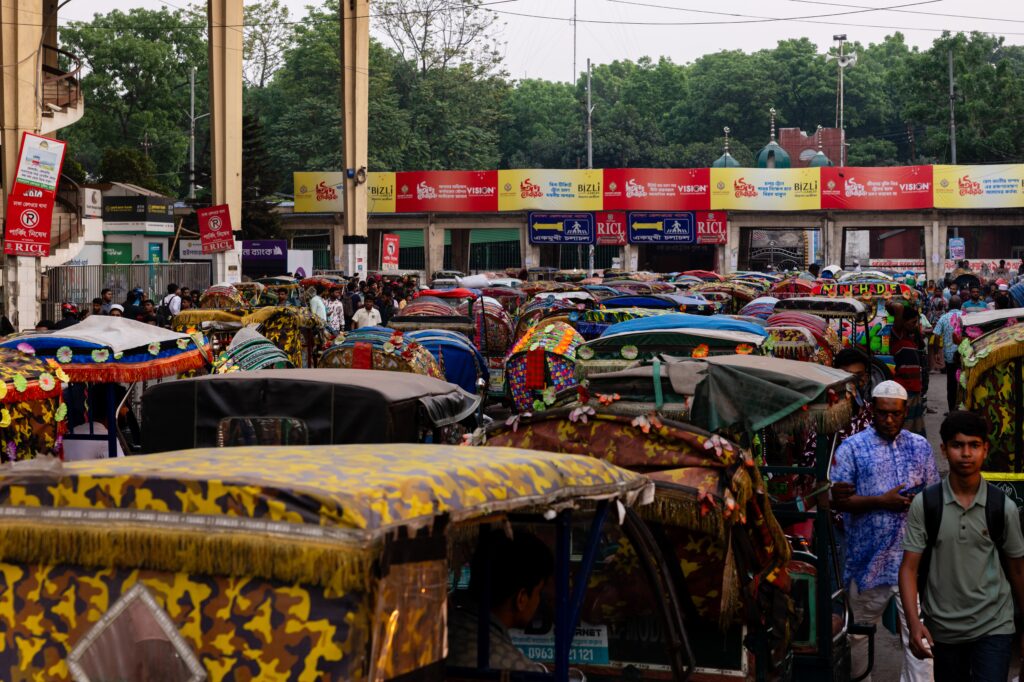
Unlike many cities where different social classes use different forms of transport, Dhaka’s rickshaws are used by almost everyone.
The reasons are practical. Rickshaws can navigate narrow streets, avoid parking issues and often provide a faster option than cars for short journeys in heavily congested areas.
The Rickshaw Drivers
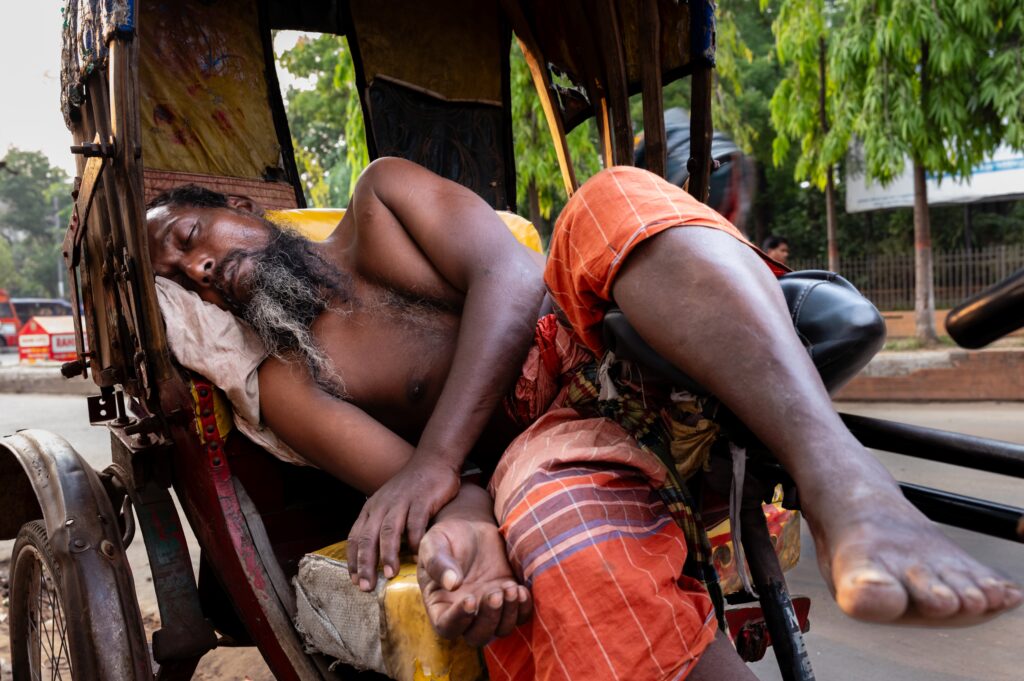
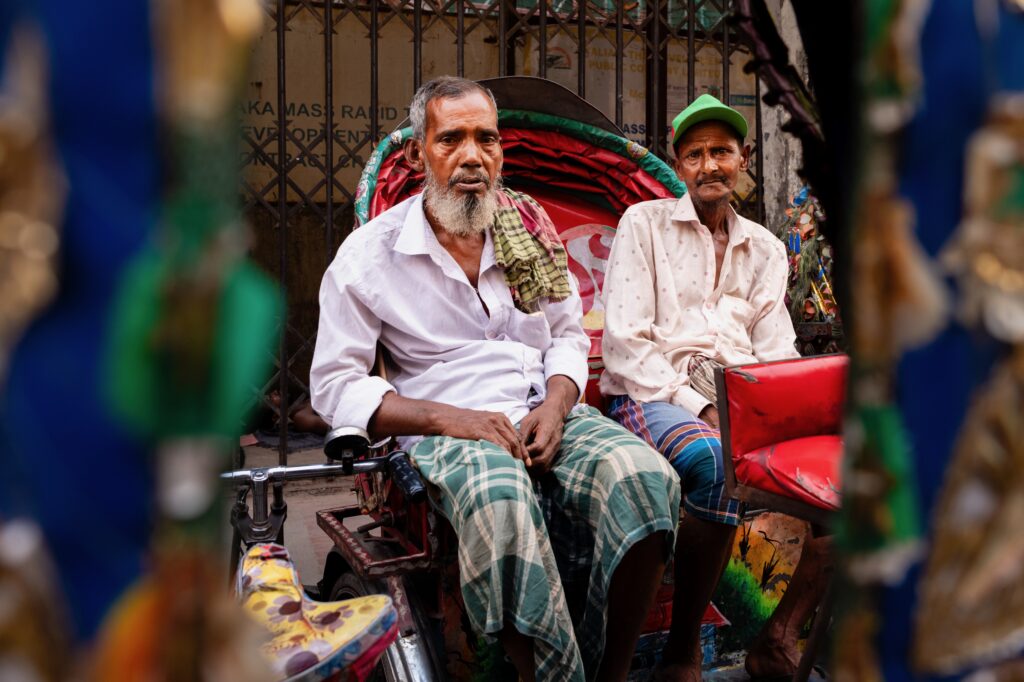
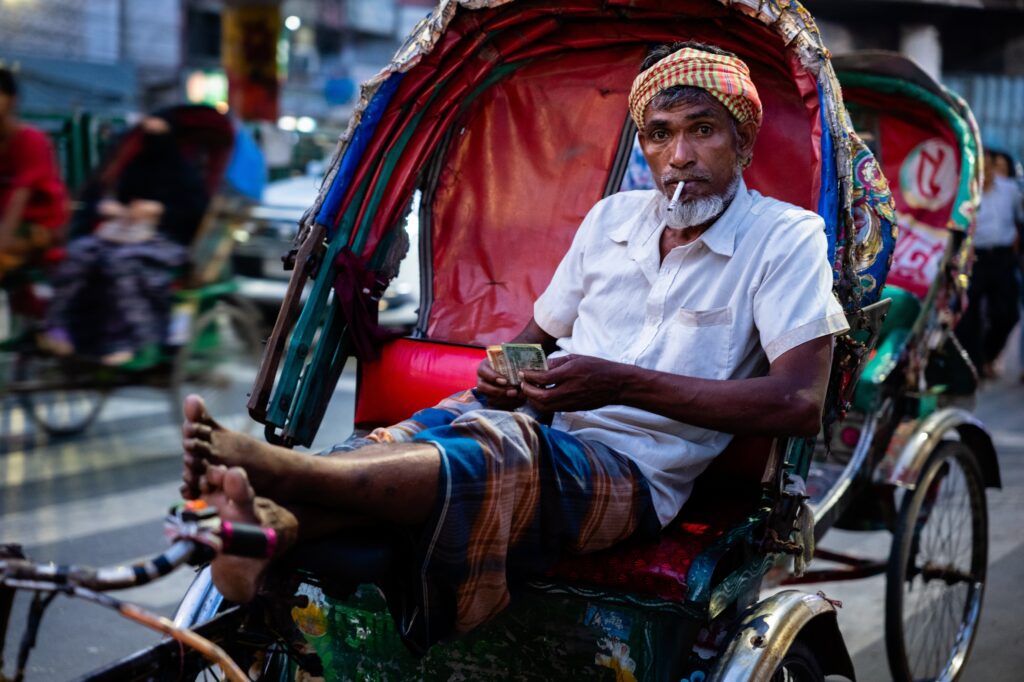
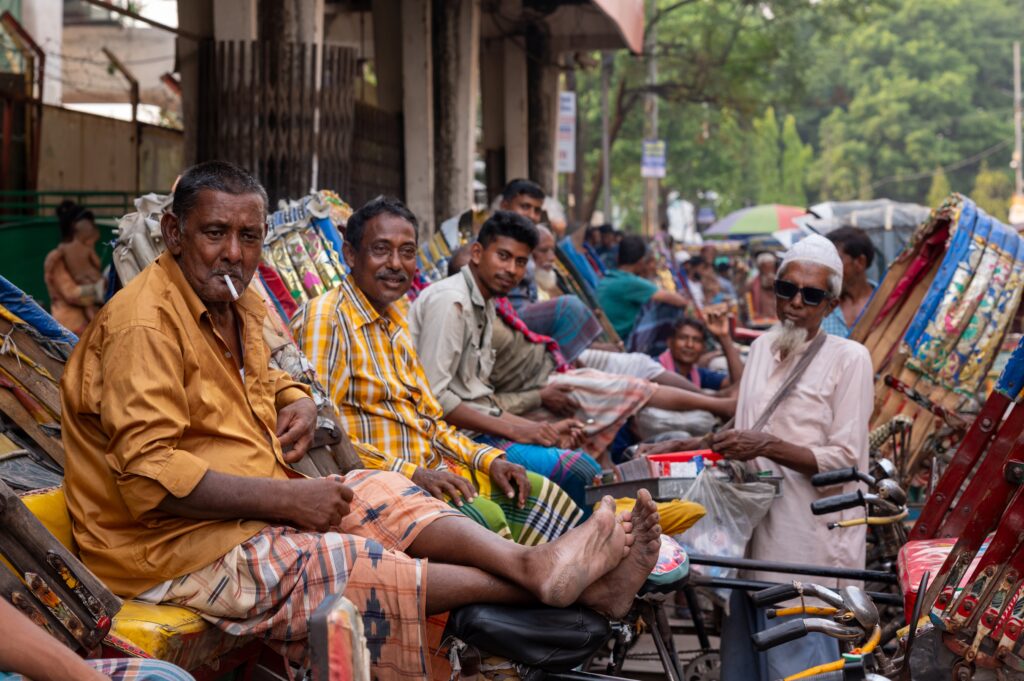
Most rickshaw drivers, known locally as rickshaw wallahs, originate from rural Bangladesh. Many migrate to Dhaka seeking employment opportunities unavailable in their villages.
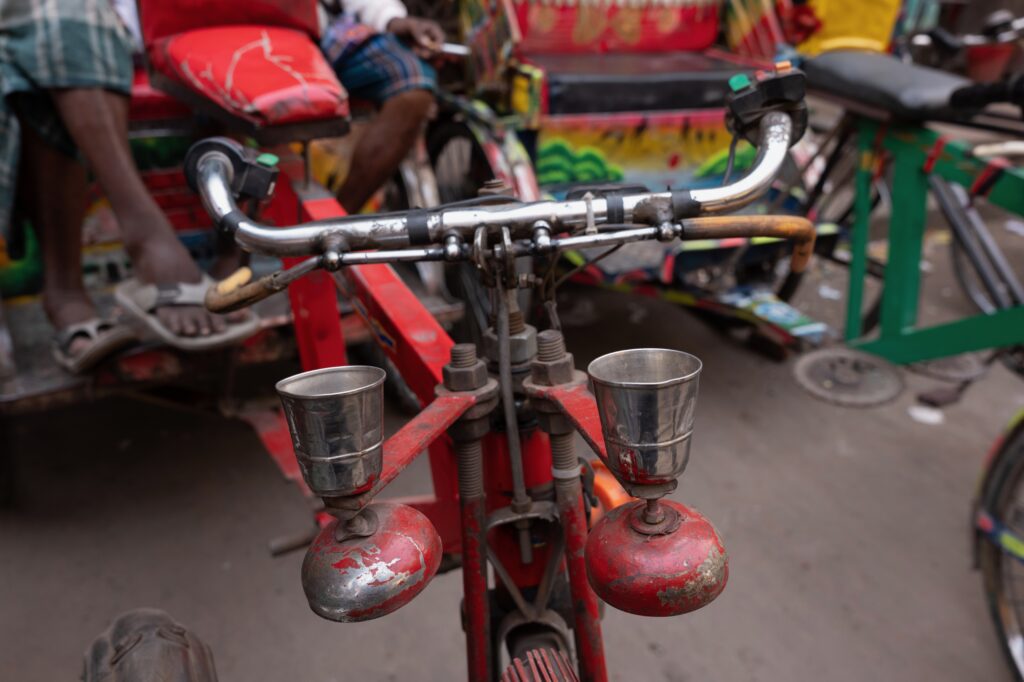
Driving a pedal rickshaw is physically demanding work. Drivers spend long hours exposed to heat, humidity, rain and traffic while transporting passengers across the city. For many, income is earned trip by trip, making every fare important.
The job requires considerable local knowledge. Experienced drivers understand shortcuts, neighbourhood layouts and the countless small lanes that make up much of Dhaka’s urban landscape.
Despite the physical challenges, the profession supports hundreds of thousands of families and remains a critical source of employment across the city.
How Much Should You Pay?
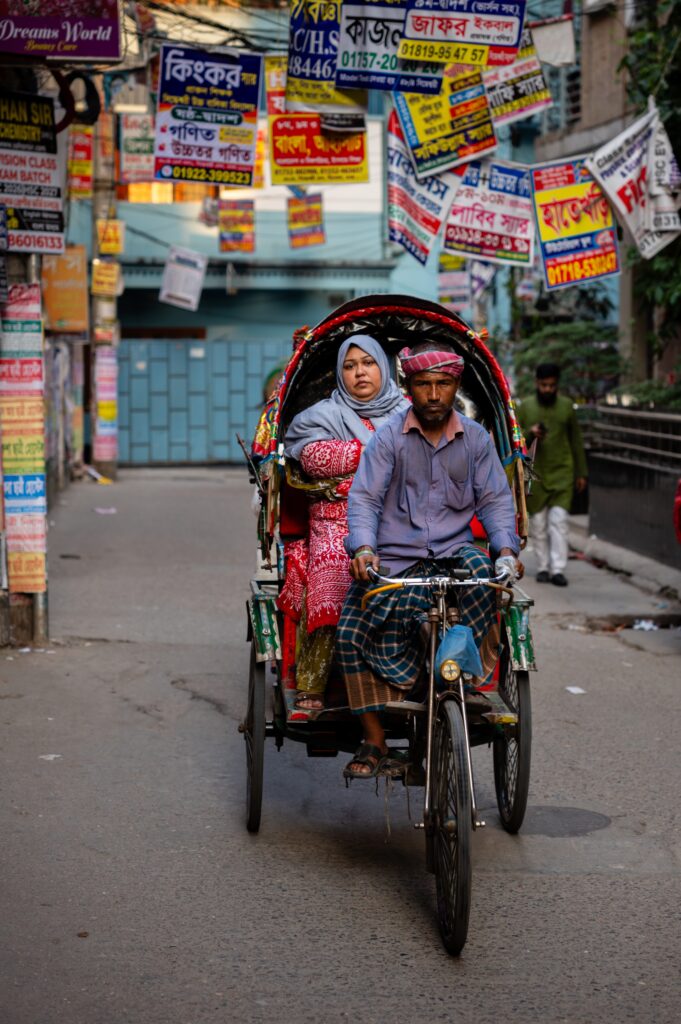
One of the first things visitors notice is that there are rarely fixed fares.
Negotiation is part of the process.
While prices fluctuate depending on distance, traffic and location, a typical short journey of one to two kilometres may cost between 50 and 100 Bangladeshi Taka. Longer rides of three to five kilometres might cost between 100 and 250 Taka depending on conditions.
As a visitor, it is often worth paying a small premium rather than arguing over the equivalent of a few cents. Agreeing on the fare before departure keeps the experience friendly and straightforward.
Most rides are best kept relatively short. Distances beyond five kilometres can become slow due to traffic and are often better covered using a CNG auto-rickshaw, rideshare service or the metro.
The Great Transition: From Pedals to Electricity
One of the biggest changes occurring in Dhaka today is the rise of battery-powered rickshaws.
Traditional pedal rickshaws still dominate many parts of the city, but electric versions have expanded rapidly over the past decade. These vehicles look similar but use battery-powered motors to assist or replace human pedalling.
The reasons are obvious:
- Less physical strain on drivers
- Greater passenger capacity
- Faster journeys
- Higher earning potential
However, the transition has created debate. Critics argue that electric rickshaws contribute to congestion and can be less safe due to higher speeds and limited regulation. Authorities have periodically attempted to restrict their use on major roads.
Locals have even developed nicknames for some of the faster electric models, reflecting their growing presence on Dhaka’s streets.
What Does the Future Hold?
The future of Dhaka’s rickshaws will likely involve a mixture of tradition and technology.
Pedal-powered rickshaws remain deeply embedded in the city’s culture and provide livelihoods for enormous numbers of people. At the same time, electric versions continue to expand because they offer greater efficiency and higher incomes for drivers.
The challenge for Dhaka will be balancing:
- Employment
- Traffic management
- Safety
- Environmental concerns
- Cultural heritage
Whatever happens, it is difficult to imagine Dhaka without rickshaws. They are far more than vehicles. They are moving pieces of art, an economic lifeline for many families and one of the most recognisable symbols of the city.
For visitors, spending an hour exploring Dhaka by rickshaw is one of the simplest and most authentic ways to understand how the city really works.