
The Construction Supply Chain of Dhaka
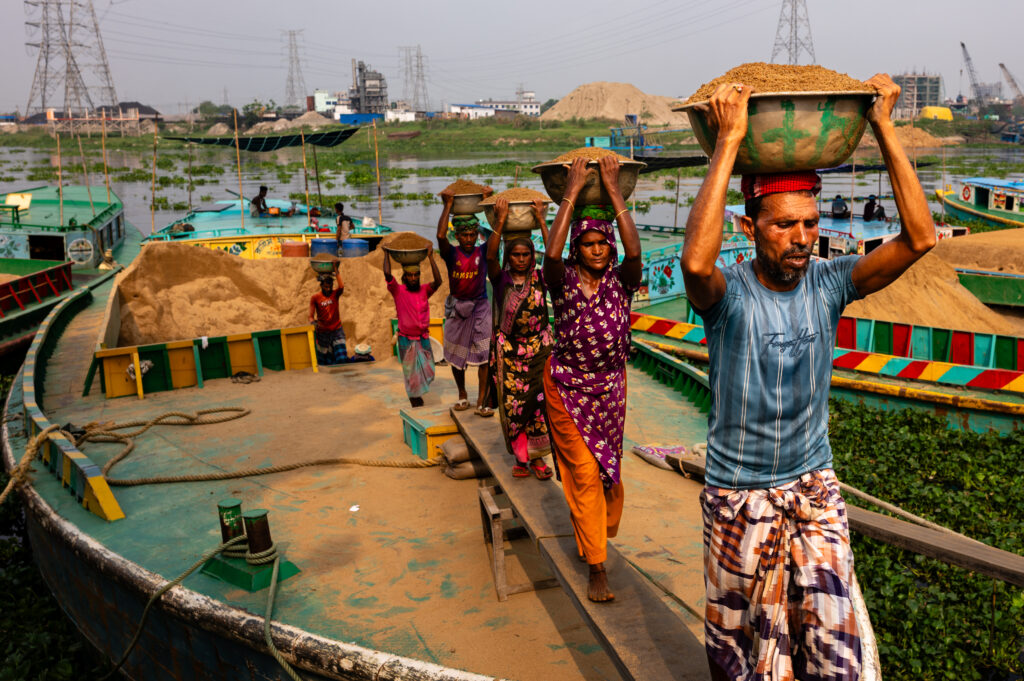
Dhaka is one of the fastest-growing megacities in the world. Every year, new apartment buildings, roads, bridges, factories and commercial developments require enormous quantities of construction materials.
What many visitors do not realise is that much of this material arrives by river.
Road transport in and around Dhaka is notoriously congested. Moving large quantities of sand, gravel and bricks by truck over long distances would be slow and expensive. Rivers provide a far more efficient solution.
Throughout Bangladesh, sand is extracted from river systems including the Padma, Jamuna and Meghna river networks. Gravel and stone often originate from northern districts near the Indian border, particularly around areas such as Sylhet and Sunamganj where stone quarrying has historically been important.
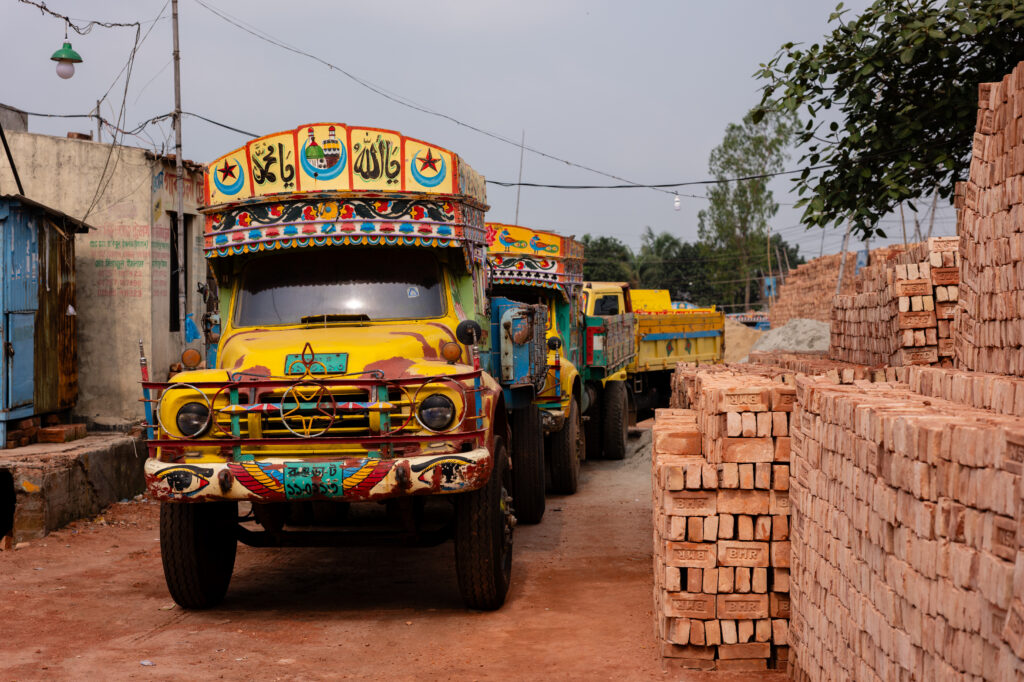
Bricks come from thousands of brick kilns scattered across the country. During the dry season, many of these kilns operate almost continuously, producing the materials needed for the next phase of urban development.
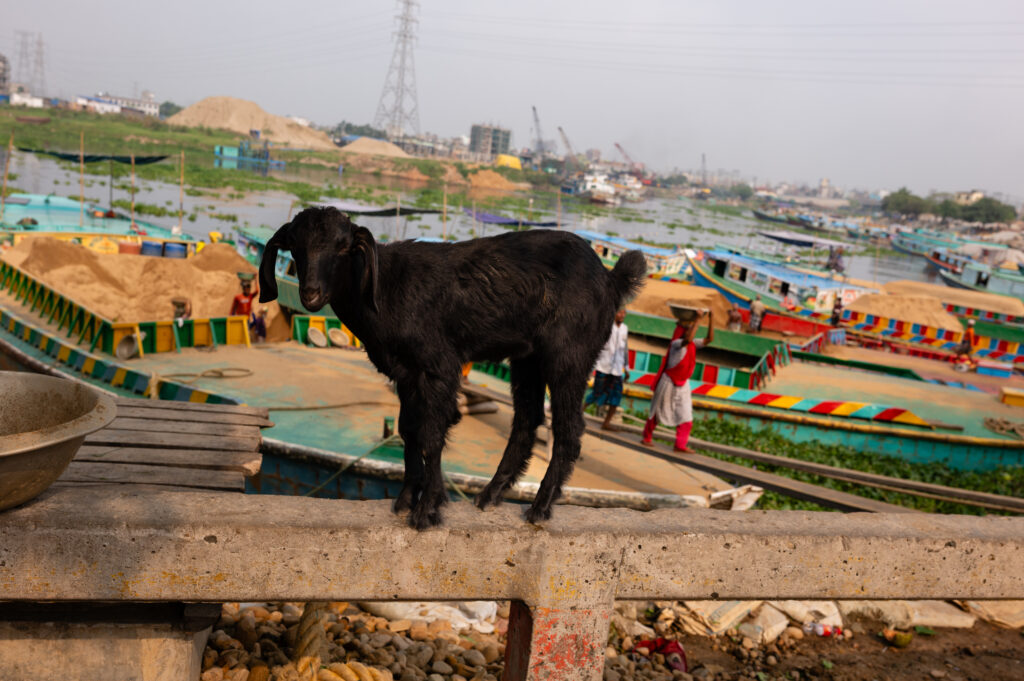
The result is an enormous logistics network centred around waterways. Barges travel overnight carrying hundreds or sometimes thousands of tonnes of material toward Dhaka, where riverside depots receive, store and distribute the cargo.
The Journey of the Barges
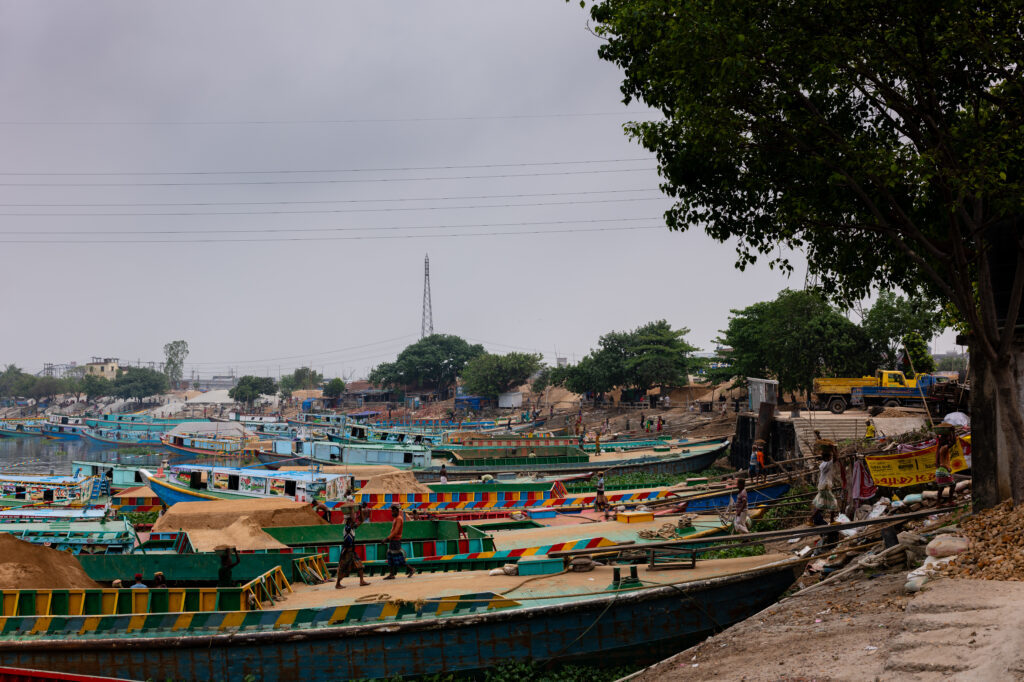
Most of the barges arriving near Gabtoli have travelled for many hours, sometimes days.
Unlike container shipping, these vessels move relatively slowly. Their cargo is usually piled high above deck level, creating floating mountains of sand, stone or bricks.
River transport remains remarkably efficient in Bangladesh because of the country’s extensive network of waterways. Even today, rivers often provide the cheapest and most practical method of moving bulk materials.
As dawn approaches, many barges begin arriving at riverside depots where unloading operations start almost immediately. Time matters because each vessel needs to return for another load as quickly as possible.
The scene can be surprisingly organised despite appearing chaotic from a distance.
The Workers Who Keep It Moving
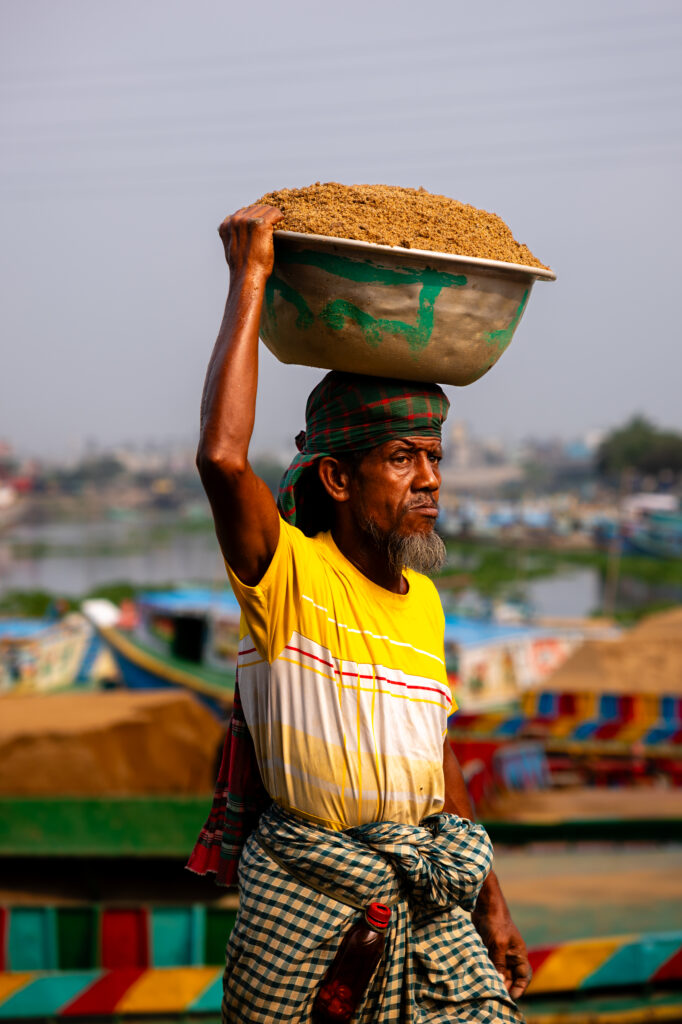
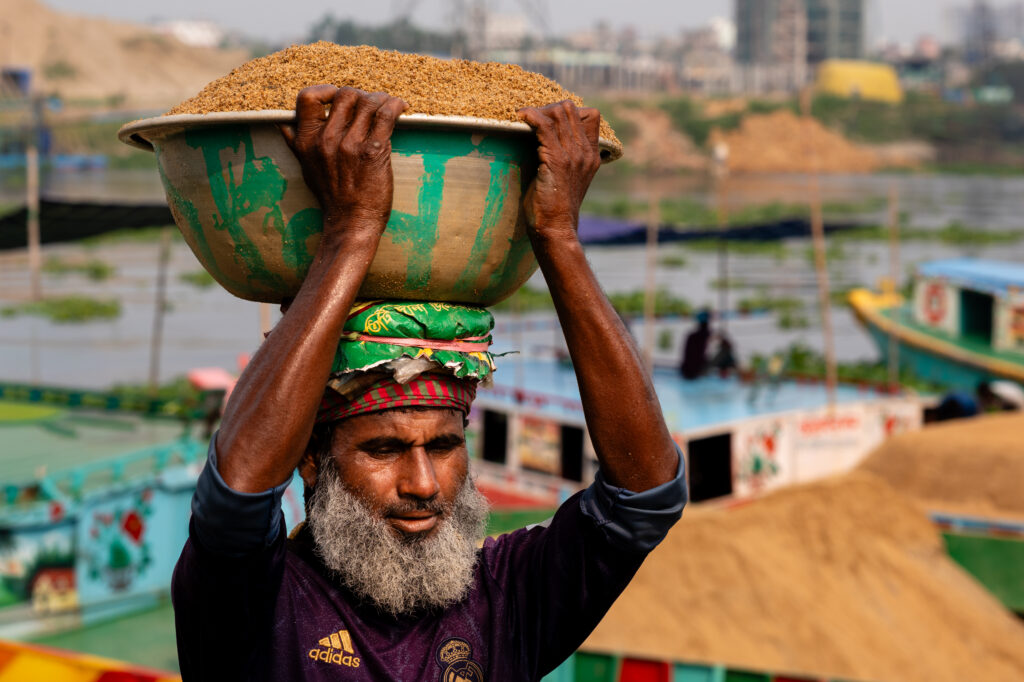
The most striking aspect of the river depots is the workforce.
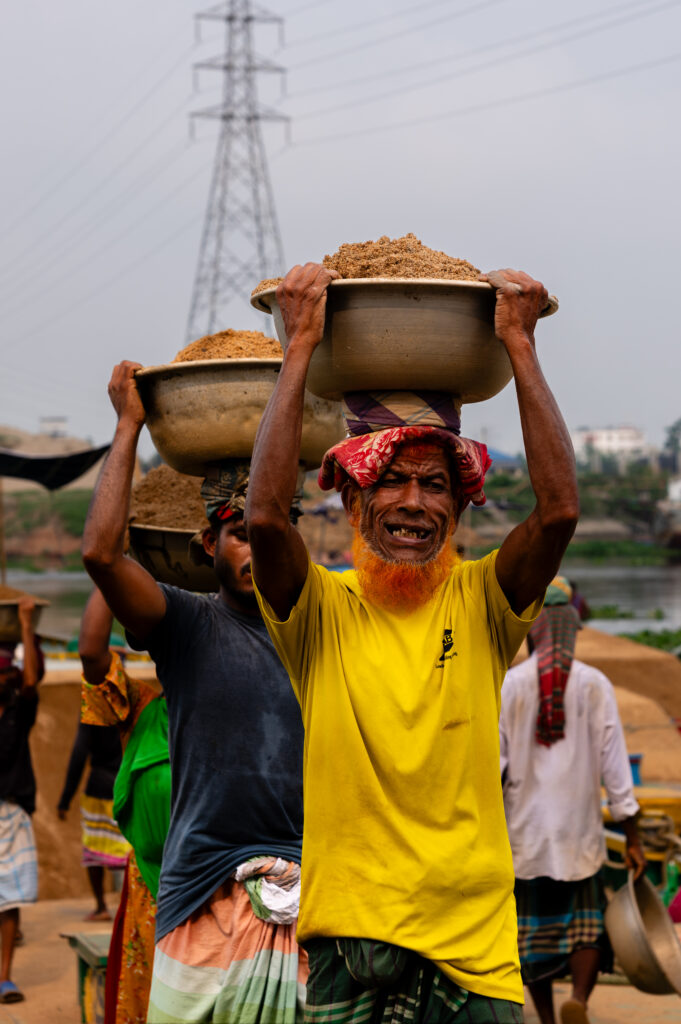
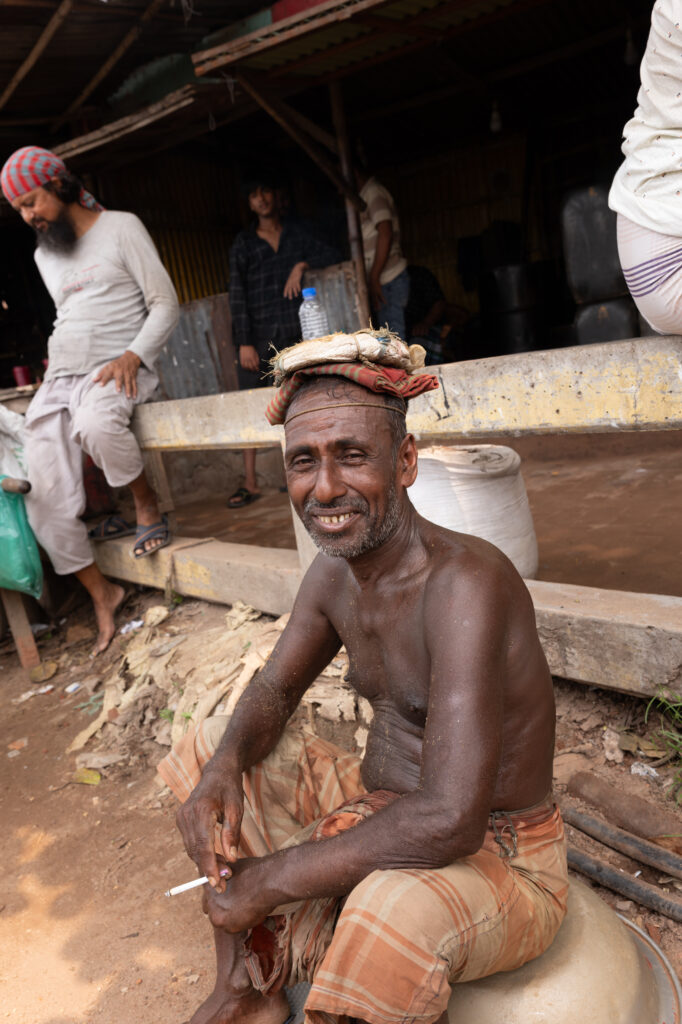
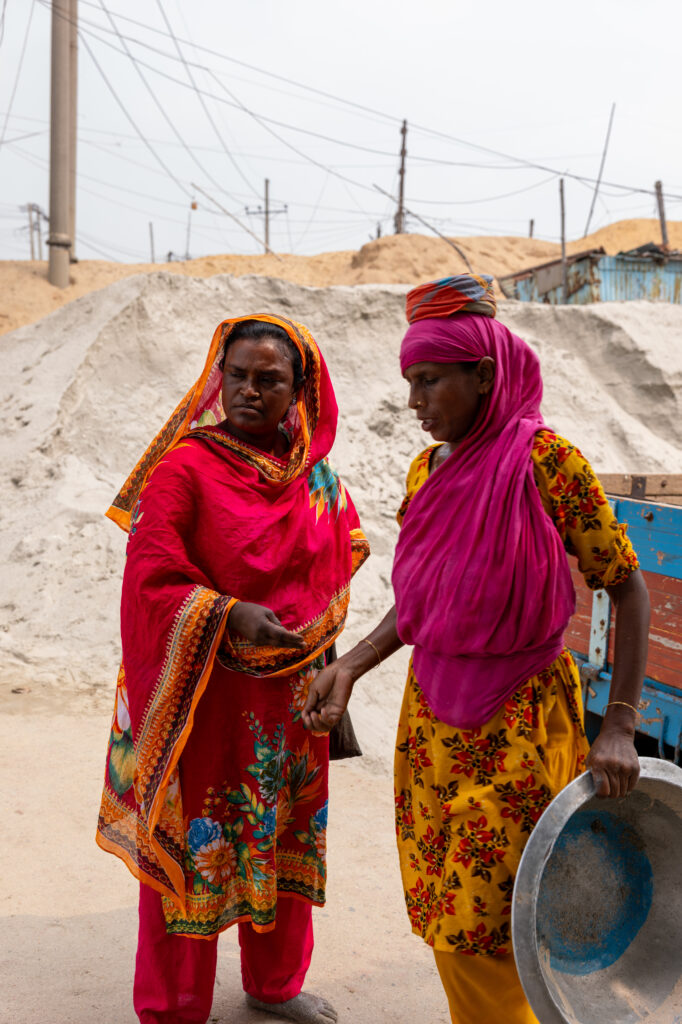
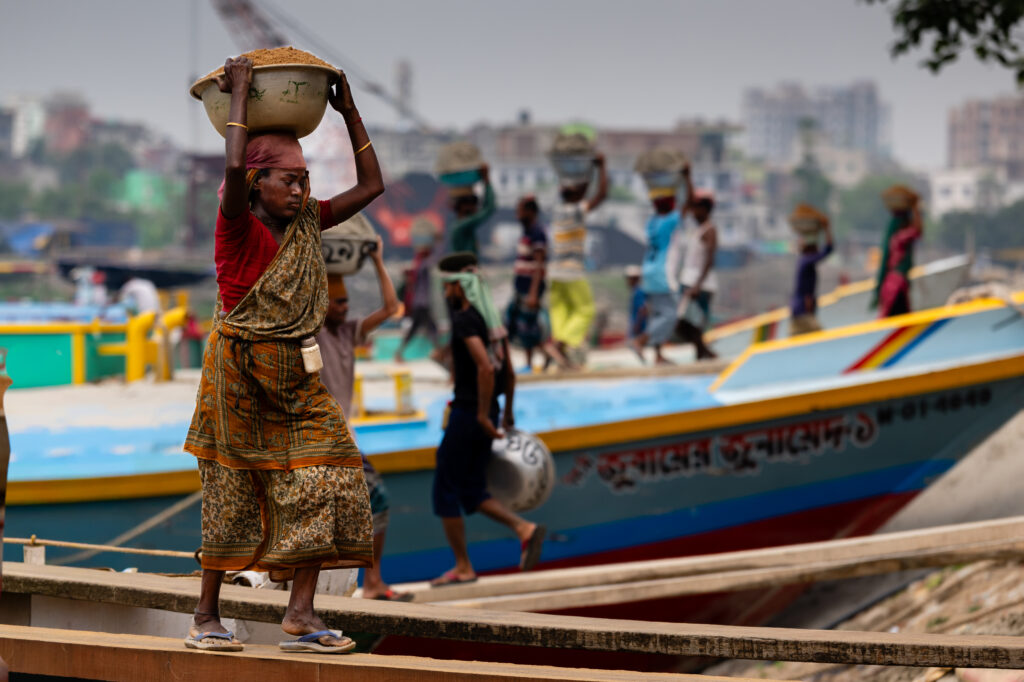
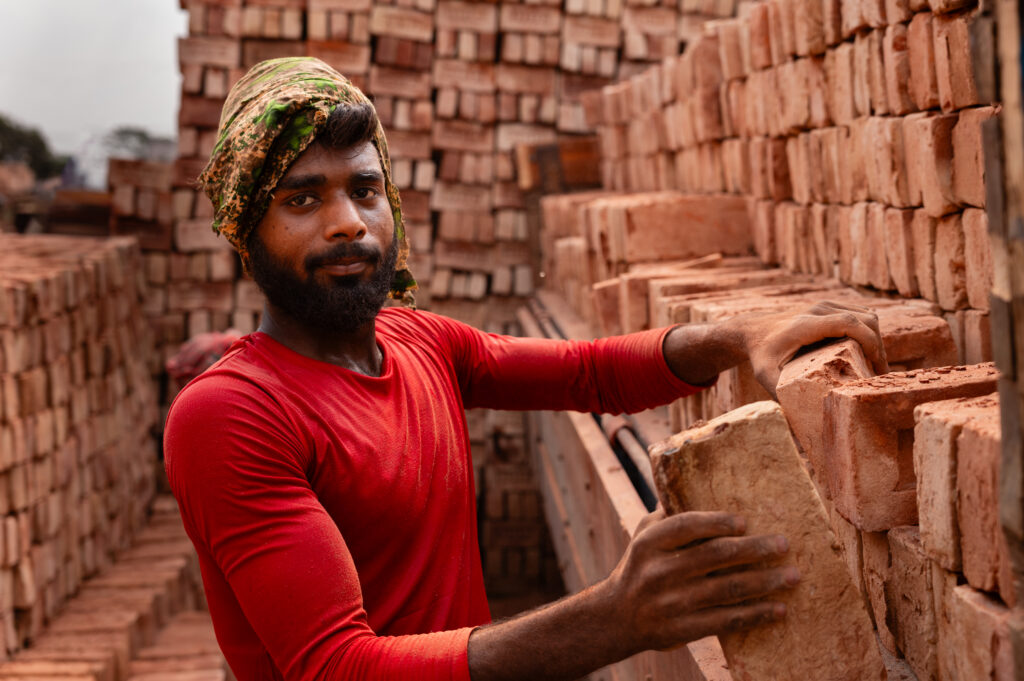
Many labourers come from rural districts where employment opportunities are limited. Seasonal migration to Dhaka remains common, particularly among younger men seeking work.
The work is physically demanding.
Workers:
- shovel sand
- unload bricks
- move gravel
- secure barges
- guide trucks
- operate loading equipment
Some tasks remain almost entirely manual despite the enormous quantities involved.
For many labourers, earnings remain modest by international standards. Daily wages can vary depending on the task, season and demand, but many workers earn the equivalent of only a few US dollars per day for physically exhausting labour.
Yet these jobs remain highly sought after because they provide a regular source of income compared with agricultural work in rural areas.
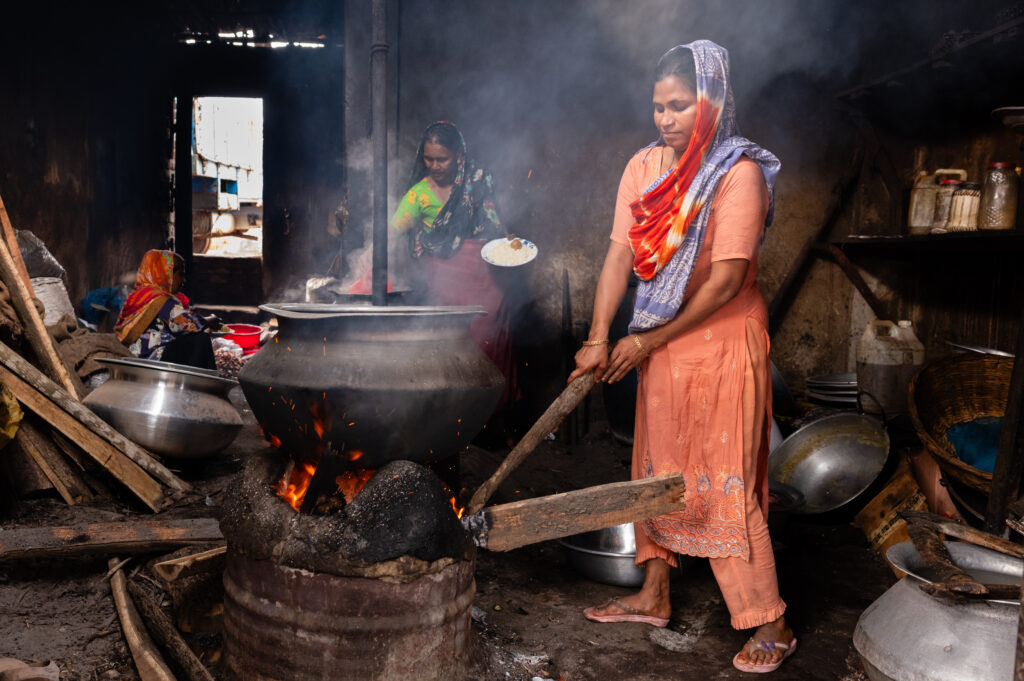
Throughout the day, workers gather at tea stalls and roadside food vendors between shifts. These small businesses depend heavily on the labour force and form an important part of the local economy.
Who Owns and Runs the Business?
The river material trade operates through a network of owners, operators and intermediaries.
At the top are companies or individuals who own:
- barges
- depots
- storage yards
- trucking operations
- extraction permits
Some businesses control multiple parts of the supply chain, while others specialise in only one stage.
Materials may pass through several hands before reaching a construction site. A barge owner might transport sand for a wholesaler, who then sells it to local distributors, who finally supply contractors working on buildings across Dhaka.
Many transactions still rely heavily on personal relationships and established business networks.
The scale of the industry is enormous because virtually every major construction project in Dhaka depends on these materials.
Without the river supply chain, much of the city’s growth would simply stop.
Life Around the Depots
The riverside storage areas are almost like temporary industrial towns.
Huge piles of sand, stone and bricks dominate the landscape. Trucks move continuously in and out carrying materials toward construction sites across the city.
Mechanics repair equipment on-site. Food vendors serve workers throughout the day. Small offices handle sales and logistics. Labour contractors organise crews and assign work.
Everything revolves around movement.
Even when no unloading is taking place, the yards feel alive with activity.
The environment is harsh. Dust hangs in the air. Temperatures rise quickly during the day. Workers often perform physically demanding tasks with limited protective equipment.
Yet there is also a rhythm to the operation. Barges arrive, materials are unloaded, trucks depart and the cycle begins again.

Photography Along the River
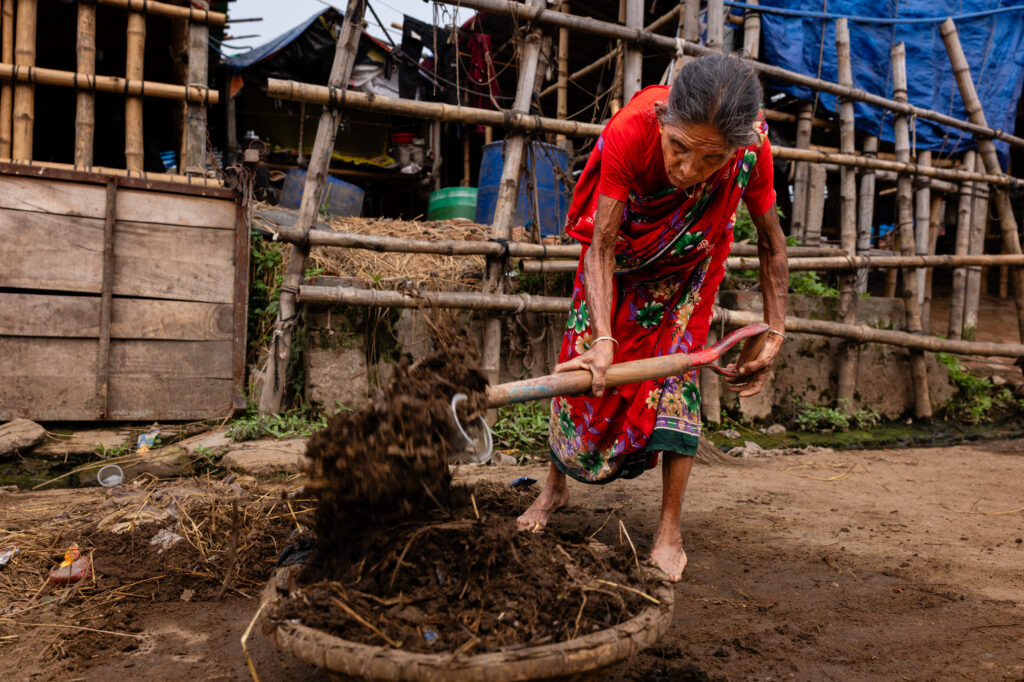
For photographers, the river depots offer a very different side of Dhaka.
Rather than focusing on monuments or historic architecture, the subject here is industry and labour.
Interesting opportunities include:
- barges emerging through morning fog
- workers unloading cargo
- mountains of sand and gravel
- truck movements
- riverside silhouettes at sunrise
- environmental portraits of labourers
- patterns created by construction materials
The scale of the operation becomes particularly apparent from elevated viewpoints or drone perspectives, where the relationship between river, barges and storage yards is easier to appreciate.
Morning light often works best, creating softer conditions while revealing the activity beginning across the depots.
Why This Fits One Hour Tourist
Most visitors to Dhaka never see where the city’s buildings begin.
They see the finished apartment towers, shopping centres and highways but not the supply chain that makes them possible.
An hour along the river near Gabtoli reveals a hidden side of urban growth. It is a place where geography, labour and commerce come together in a continuous process that never seems to stop.
The barges arriving from distant districts, the workers unloading cargo by hand and the endless movement of materials all tell the story of a city still expanding at extraordinary speed.
For travellers interested in documentary photography, industry or simply understanding how Dhaka functions behind the scenes, few experiences offer a more revealing glimpse into the machinery that keeps the capital growing.